Simple Crochet Cardigan | Free Pattern & Video Tutorial
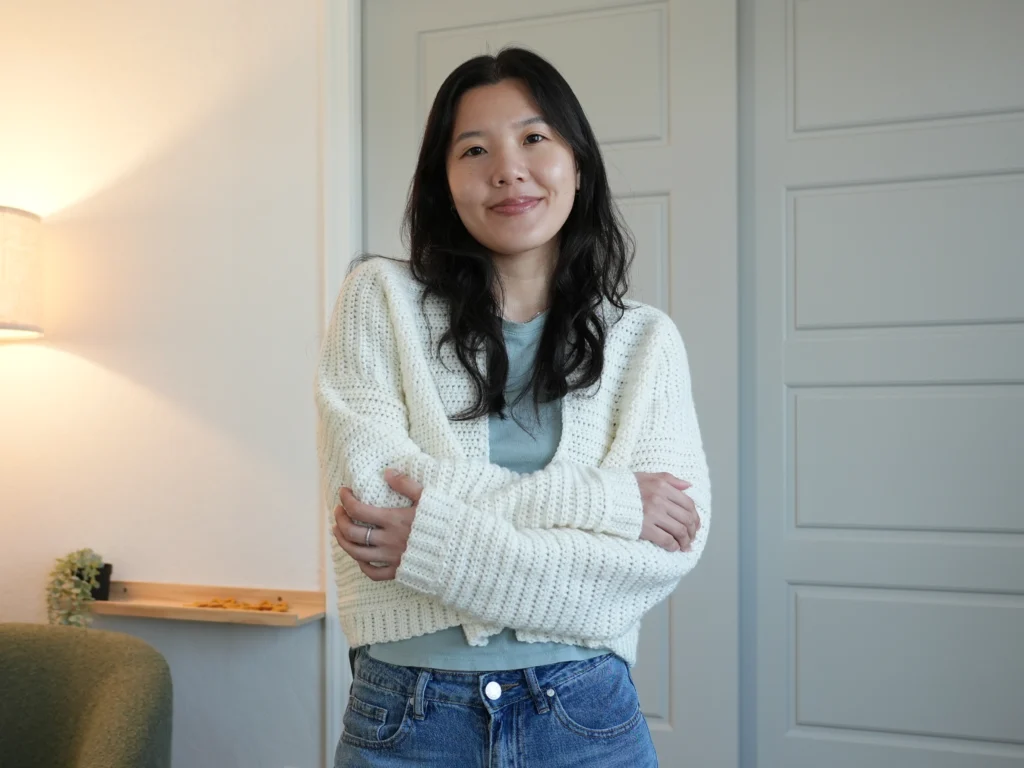
This simple crochet cardigan pattern is a great basic to wear all year round! It has a timeless, drop-shoulder shape, with ribbed finishes. Also, it’s great for beginners, using just one stitch throughout the entire project! Not to mention, you only need to crochet three pieces instead of five!
Follow along with this free written pattern, or watch the video tutorial to make your very own crochet cardigan!
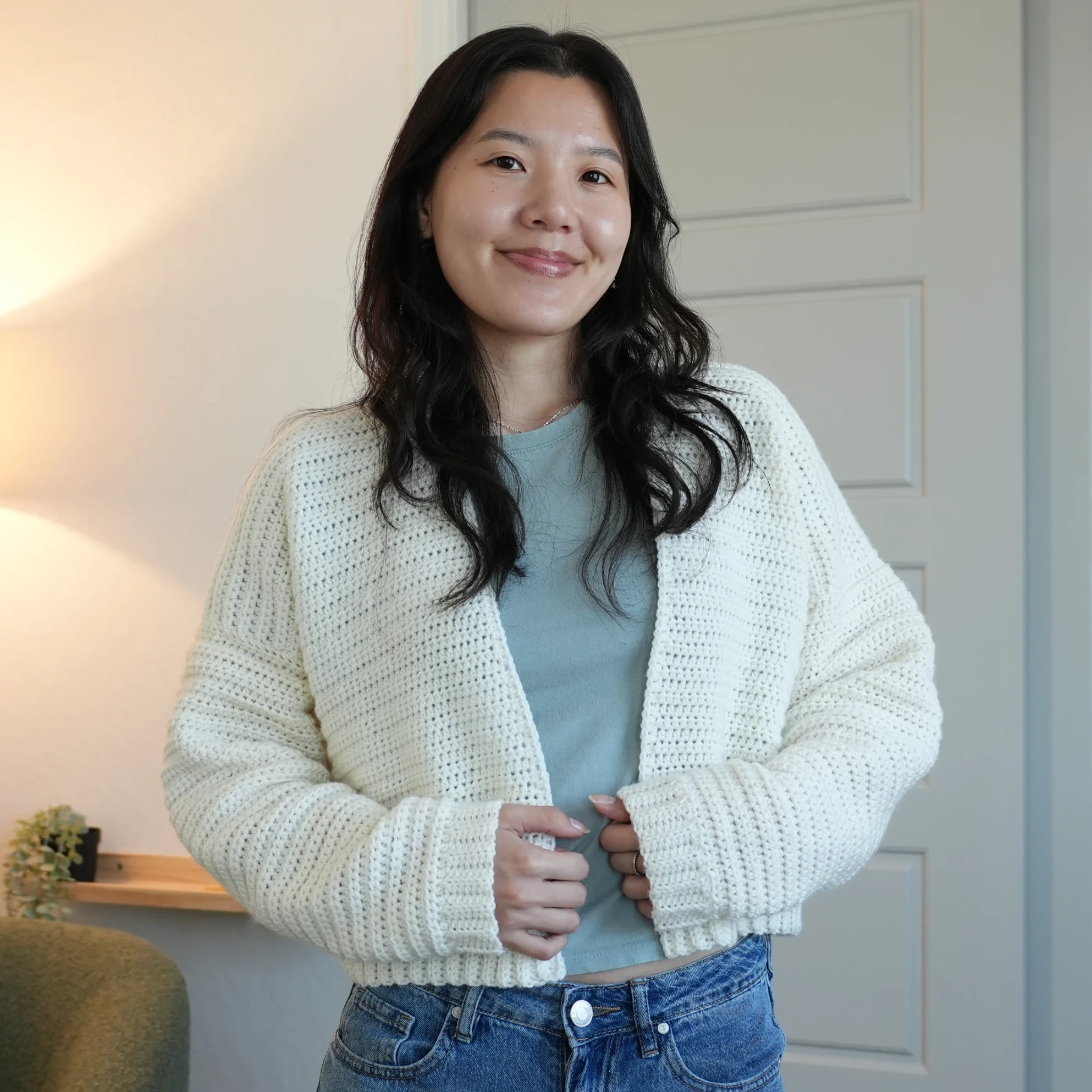
Table of Contents
This post may contain affiliate links. I may earn a small commission on qualifying purchases at no additional cost to you!
Crochet Cardigan Tutorial
Become a member to get early access to new videos!
You can follow along with my YouTube video to make your own crochet cardigan! I have timestamps included to help you jump to any point you need to!
Pattern Information
Materials
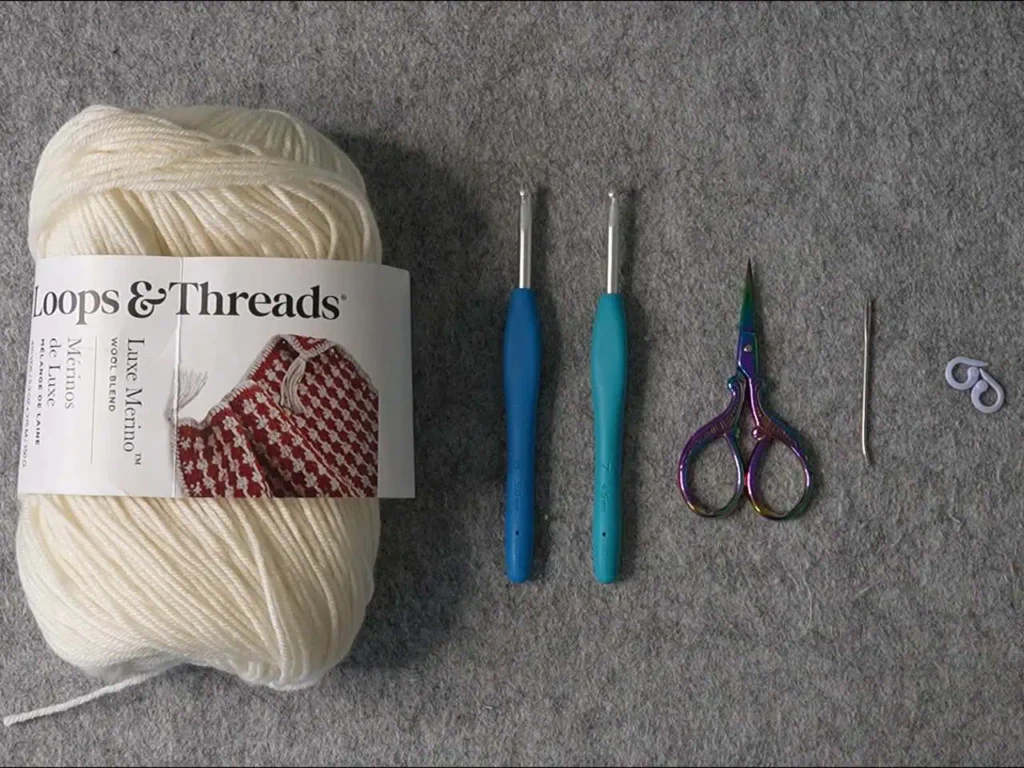
- 470 grams/1285 yards of light weight yarn (Luxe Merino in “White”)
- 5mm Clover Amour crochet hook
- (optional) Secondary crochet hook, one size down (4.5mm Clover Amour crochet hook)
- Scissors
- Yarn needle
- Stitch markers
Crochet Abbreviations
blo = back loop only
ch = chain
hdc = half double crochet
rep = repeat
st = stitch
Gauge
14 rows of 17 half double crochets makes a 10 x 10 centimeter (4″ x 4″) square
Dimensions
*makes a size Small in US adult sizing, but includes instructions to adjust the sizing
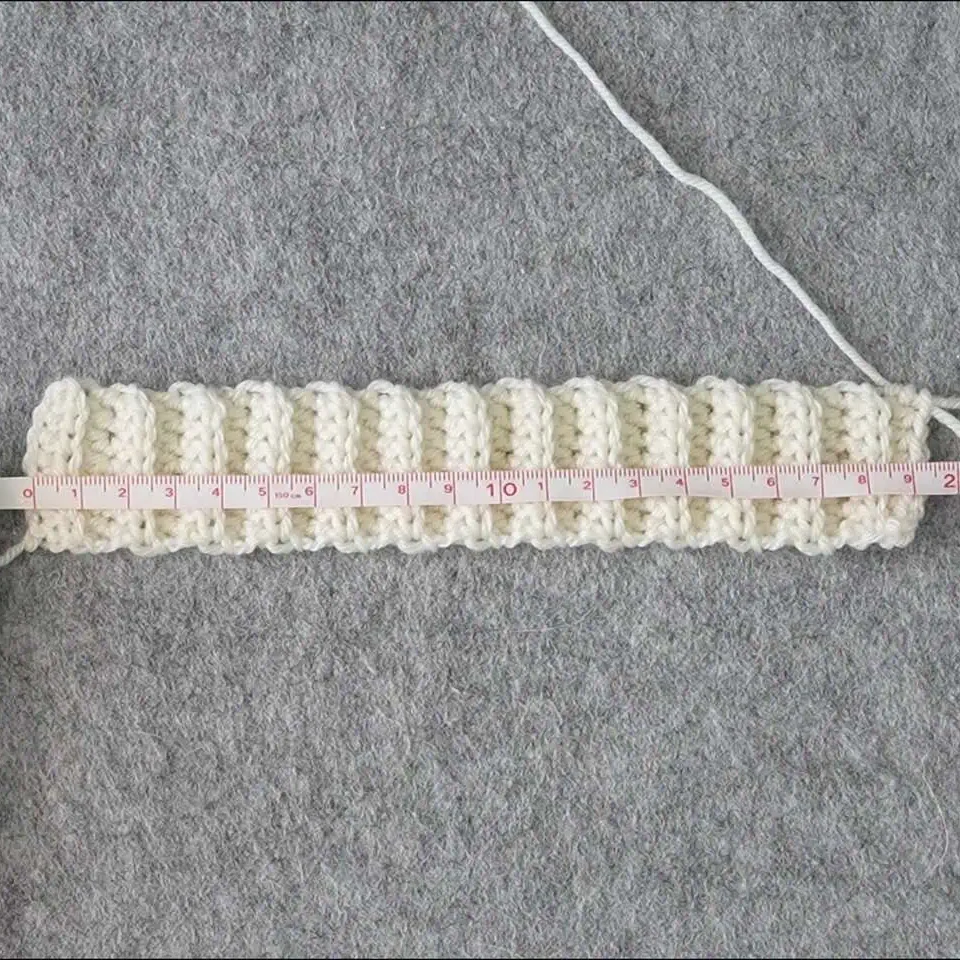
Sleeve Ribbing: 3.5 centimeters wide x 19 centimeters long (1.4 x 7.5 inches)
Sleeves: 8.5 – 19 centimeters wide x 44.5 centimeters long (3.3-7.5 x 17.5 inches)
Body Ribbing: 3.5 centimeters wide x 100 centimeters long (1.4 x 39 inches)
Front Panels: 24 centimeters wide x 42 centimeters long (9.4 x 16.5 inches)
Back Panel: 55 centimeters wide x 42 centimeters long (21.7 x 16.5 inches)
Notes and Tips
- This pattern is written using US crochet terms
- The number in (parentheses) at the end of each row is the stitch count after finishing that row
- Italicized notes tell you what to change to adjust the size
- The chain 1 at the beginning of each row does NOT count as a half double crochet
Crochet Cardigan Pattern
Tapered Sleeve Panels
Sleeve Ribbing
Use the 4.5mm hook for the ribbing.
Foundation: Make a slipknot, ch8
Note: Do fewer chains for shorter ribbing, or more chains for wider ribbing.
Row 1: hdc in 2nd ch from hook and each ch across (7)
Rows 2-26: ch1, turn, hdc blo across (7)
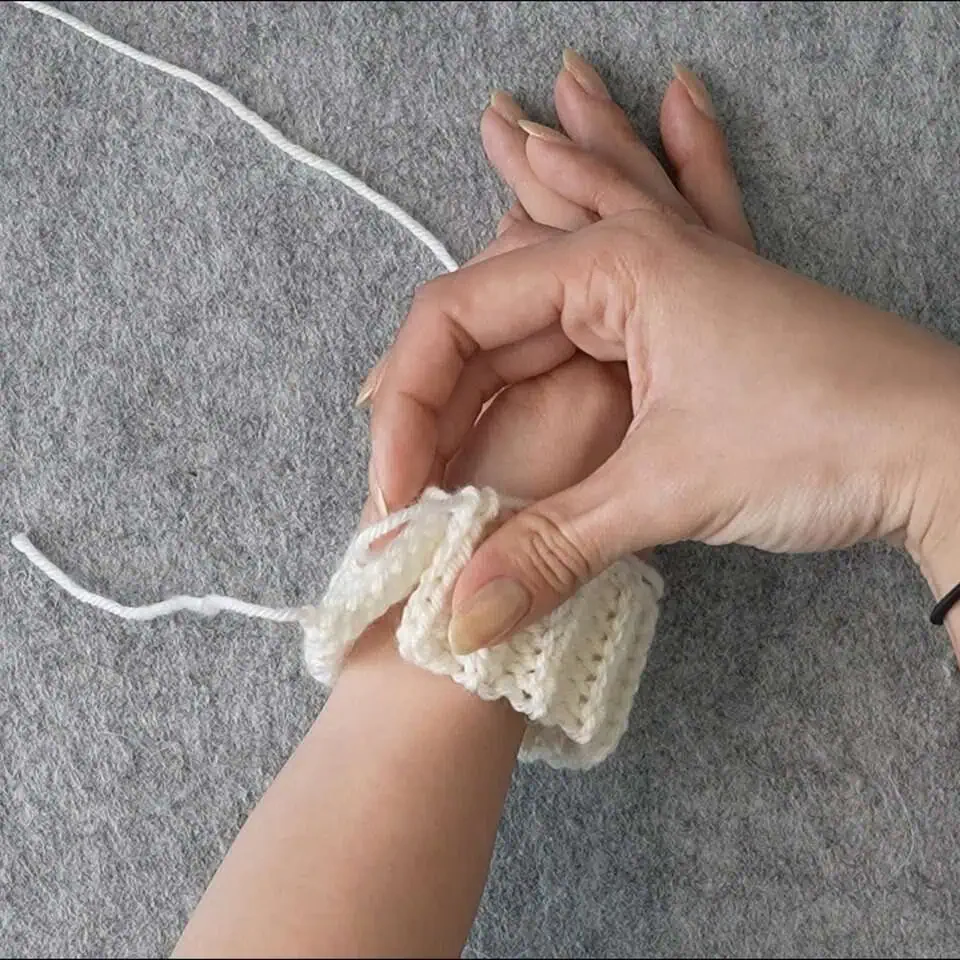
Note: Do fewer rows for a smaller sleeve cuff, or more rows for a larger sleeve cuff.
Sleeve
Now, we’ll crochet a tapered sleeve. This means that the sleeve will get wider towards the body of the cardigan. This pattern results in about a 13 degree taper.
If you prefer a straight sleeve, you can skip Row 4 because it has increases. Just be mindful of how tight it will be at the armhole.
Rotate the ribbing 90 degrees to the right. We will work along the side of the rows of ribbing.
Switch to the 5mm hook.
Row 1: ch1, hdc into the side of each row and each ridge (3 per every 2 rows) (39)
Tip: When inserting your hook into the side of the ribbing, go under at least 2 loops to avoid making a large hole.
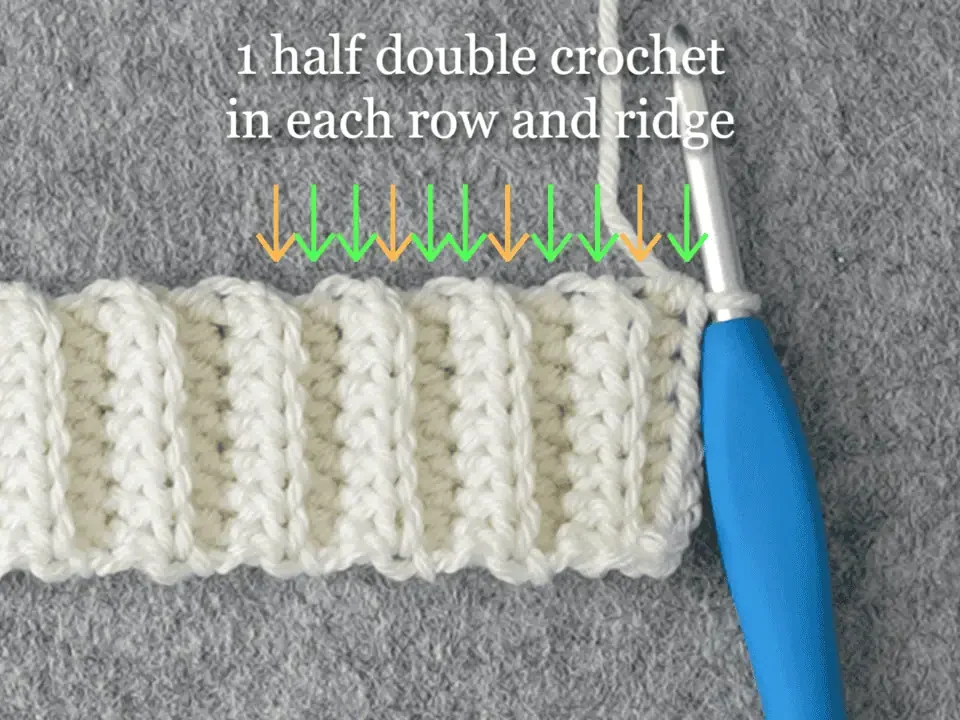
Note: If you did a different number of rows for the ribbing, divide that number by 2, then multiply it by 3 to calculate the number of stitches you should have in Row 1 of the sleeve.
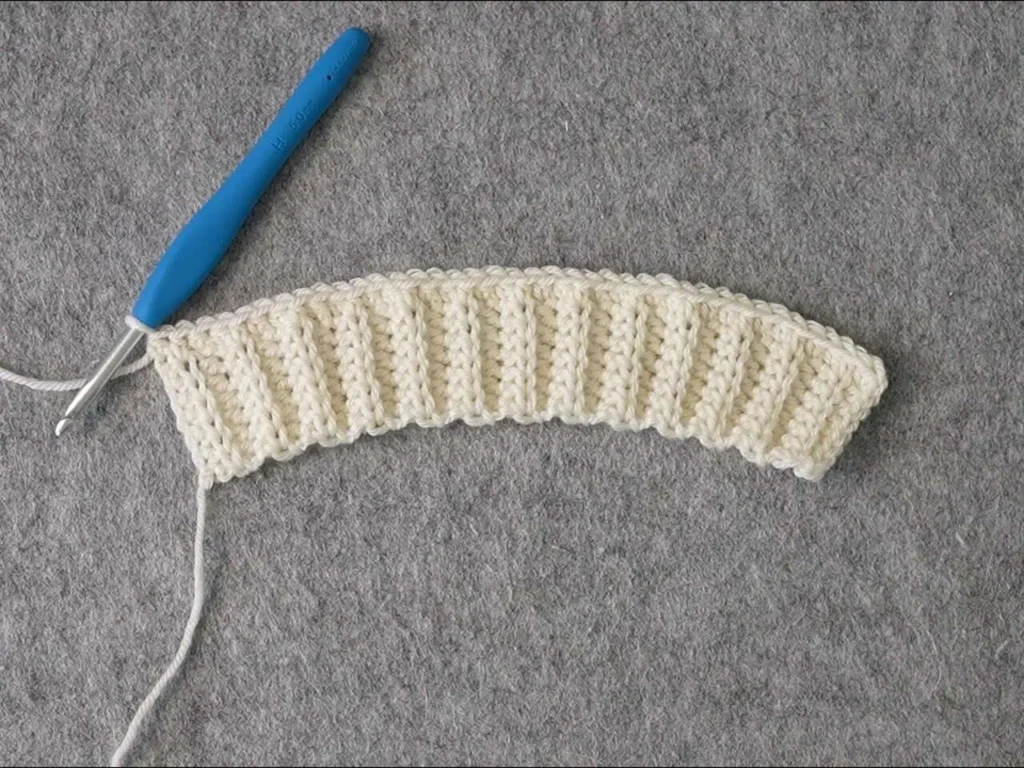
Rows 2-3: ch1, turn, hdc across (39)
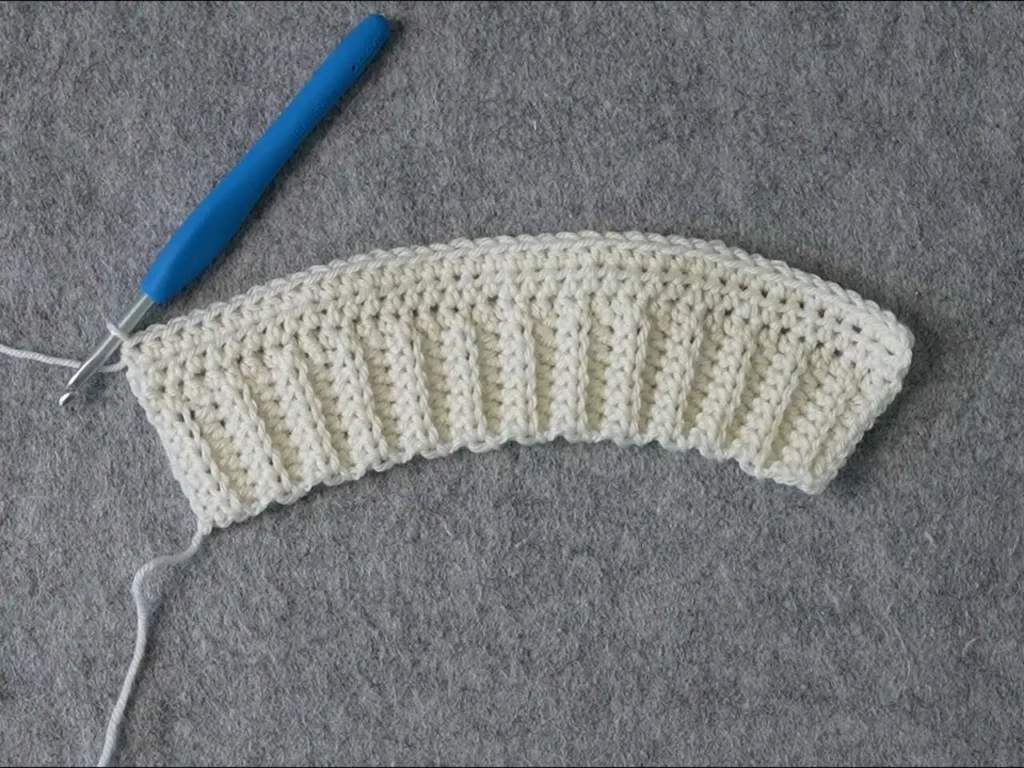
Row 4: ch1, turn, hdc2 in first st, hdc across until last st, hdc2 in last st (41)
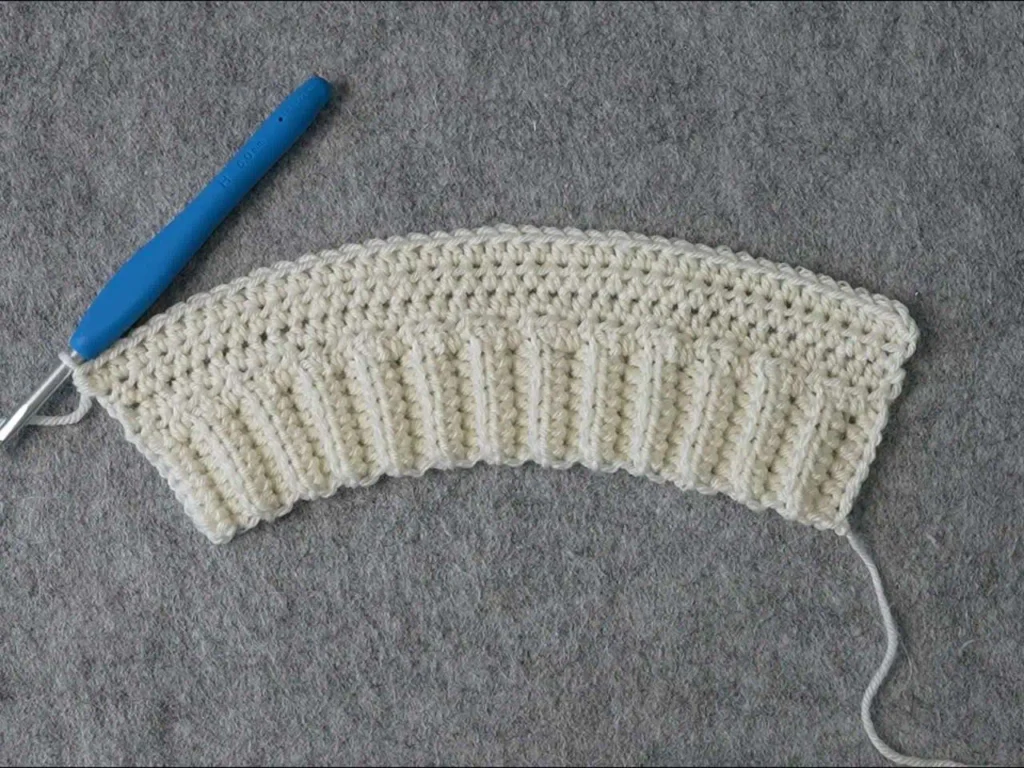
Rows 5-56: rep[Row 2] 3 times, rep[Row 4]
This means Rows 5-7 are repeats of Row 2, and Row 8 is a repeat of Row 4. Then, Rows 9-11 are repeats of Row 2, and Row 12 is a repeat of Row 4.
Below, are the stitch counts for Rows 5-56, in groups of 4.
(41, 41, 41, 43 | 43, 43, 43, 45 | 45, 45, 45, 47 | 47, 47, 47, 49 | 49, 49, 49, 51 | 51, 51, 51, 53 | 53, 53, 53, 55 | 55, 55, 55, 57 | 57, 57, 57, 59 | 59, 59, 59, 61 | 61, 61, 61, 63 | 63, 63, 63, 65 | 65, 65, 65, 67)
Note: Do fewer rows for a shorter sleeve/smaller armhole, or more rows for a longer sleeve/bigger armhole.
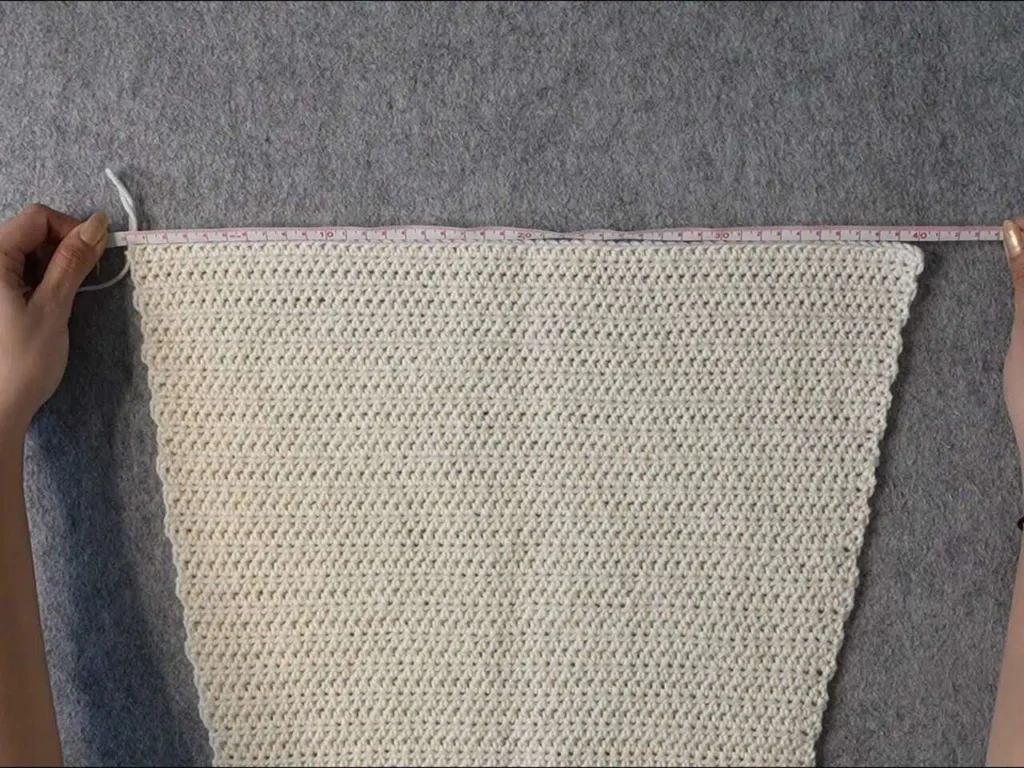
Fasten off with a 140cm long loose end to sew the sleeve to the armhole, then underneath the sleeve.
Note: If you made your sleeve much shorter or much longer than mine, adjust the length of your loose end accordingly. I like to measure out twice the total length I’ll be sewing.
Make a second, identical sleeve.
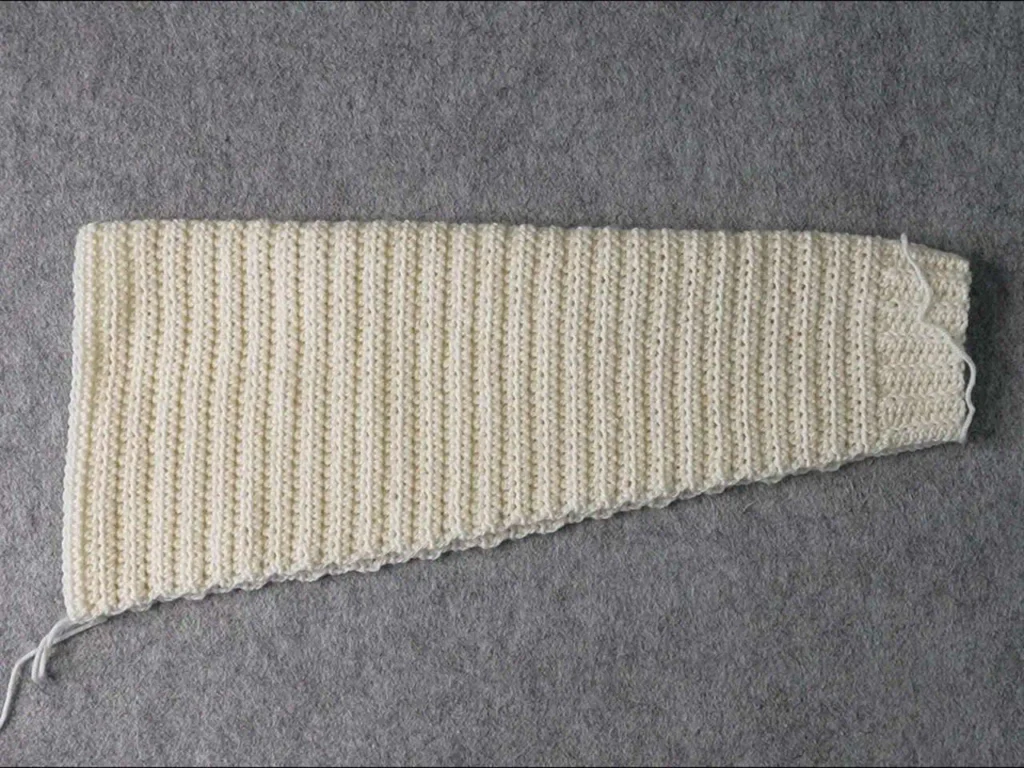
Body Panel
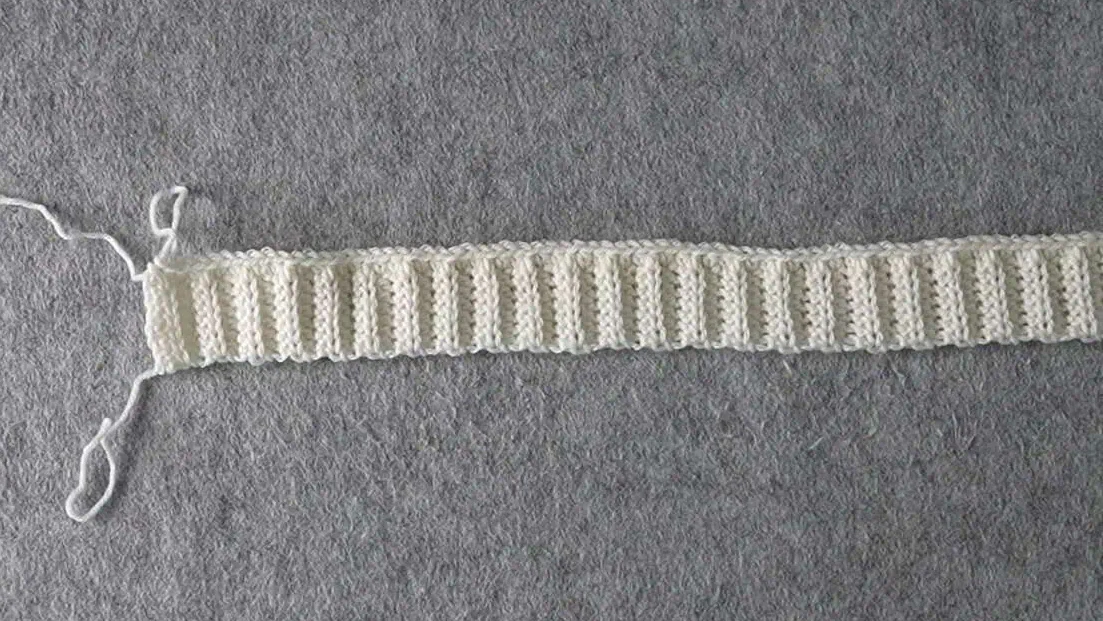
Body Ribbing
Use the 4.5mm hook for the ribbing.
Foundation: Make a slipknot, ch8
Note: Do fewer chains for shorter ribbing, or more chains for wider ribbing.
Row 1: hdc in 2nd ch from hook and each ch across (7)
Rows 2-137: ch1, turn, hdc blo across (7)
Note: Do fewer rows for a smaller cardigan, or more rows for a larger cardigan. The length of this ribbing will be the total width (horizontal length) of the front panels and the back panel of the cardigan.
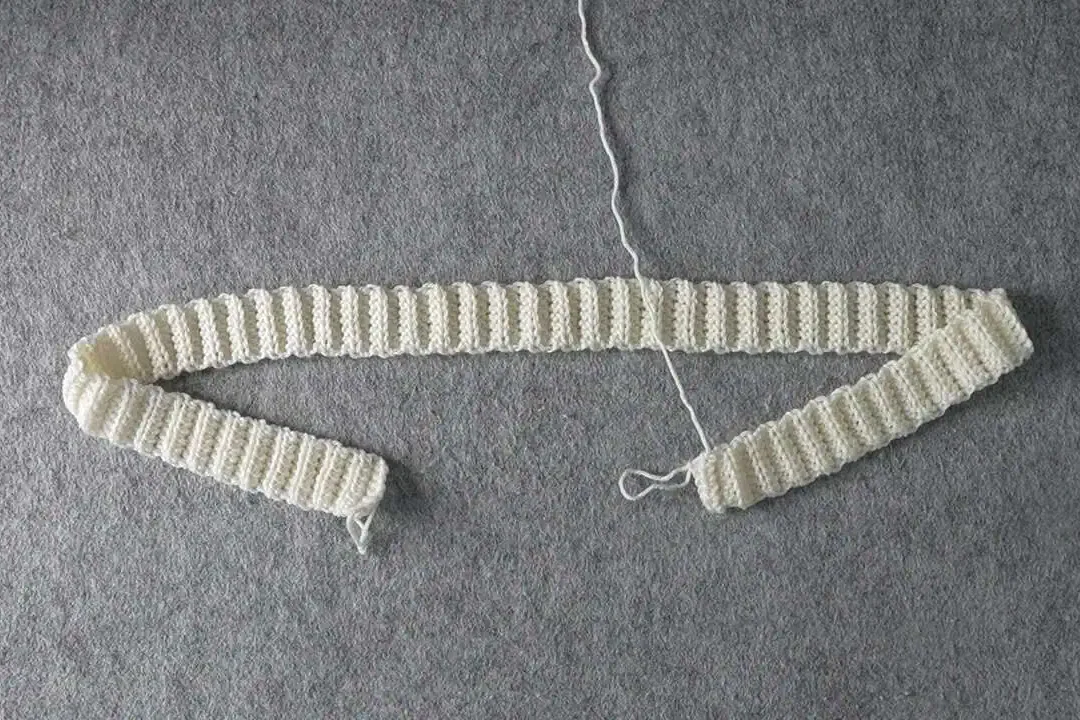
Body
Rotate the ribbing 90 degrees to the right. We will work along the side of the rows of ribbing.
Switch to the 5mm hook.
Row 1: ch1, hdc into the side of each row and every other ridge (5 per every 4 rows) (171)
Tip: When inserting your hook into the side of the ribbing, go under at least 2 loops to avoid making a large hole.
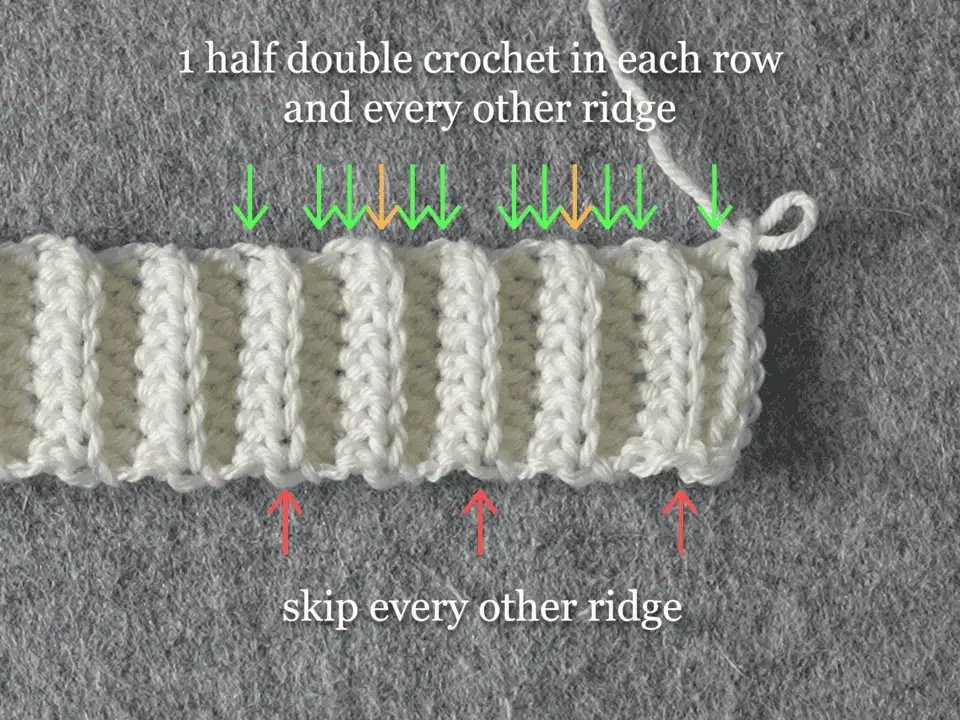
Note: If you did a different number of rows for the ribbing, divide that number by 4, then multiply it by 5 to calculate the number of stitches you should have in Row 1 of the body.
Tip: Your first row should not stretch or compress your ribbing. If it stretches your ribbing, do fewer stitches. If it compresses your ribbing, do more stitches.
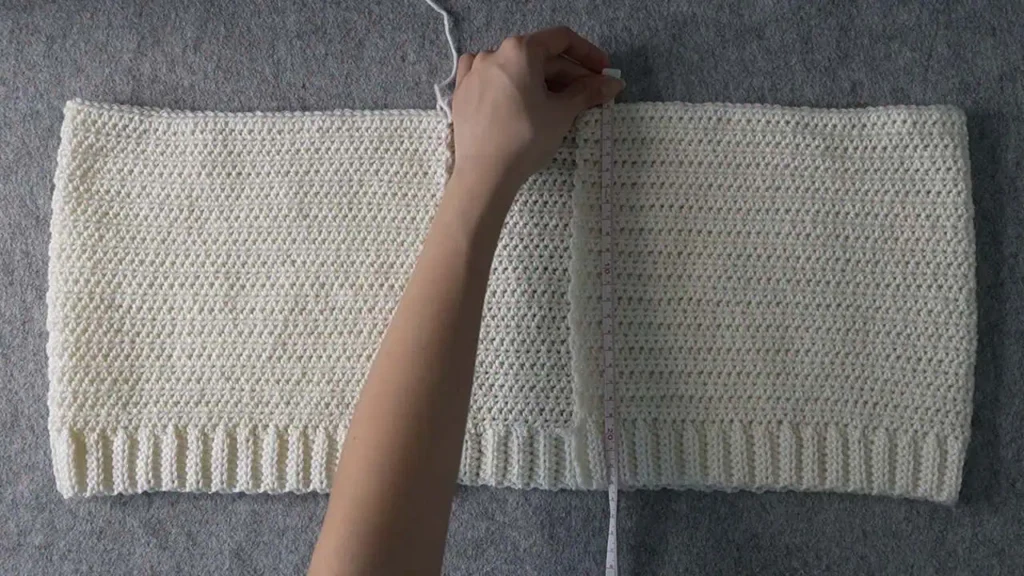
Rows 2-28: ch1, turn, hdc across (171)
Note: The number of rows here will be the length from the bottom of the cardigan to the bottom of the armhole. Do fewer rows to make it shorter, or more rows to make it longer.
Splitting Front and Back Panels
Mark the 41st stitch from the start and the 41st stitch from the end of the last row.
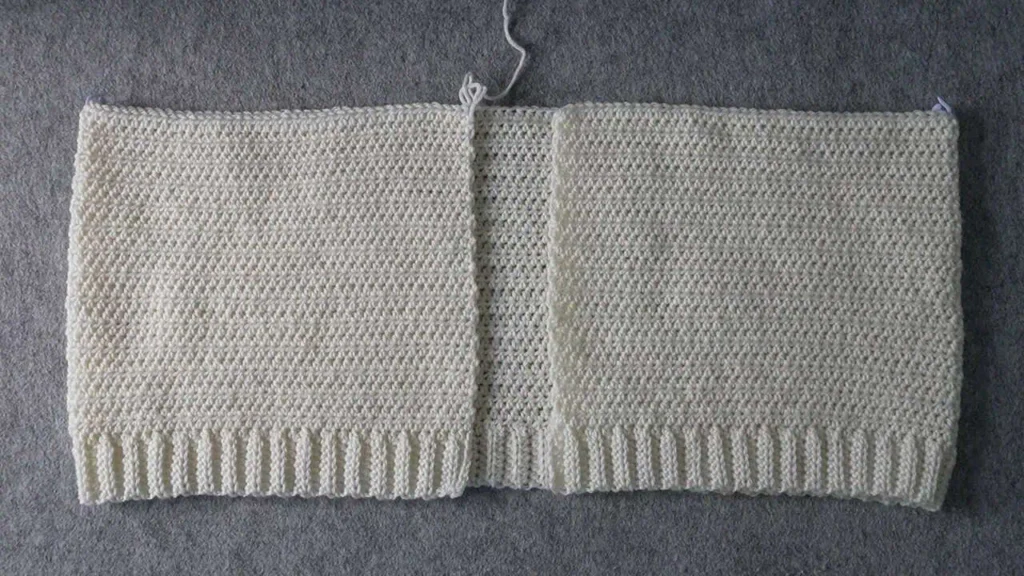
Between the stitch markers will be the width of the back panel and the ends will be the front panels.
Note: Move the stitch markers further in for a smaller back panel and wider front panels, or move them further out for a wider back panel and smaller front panels.
First Front Panel
Row 1: ch1, turn, hdc across until st marker (40)
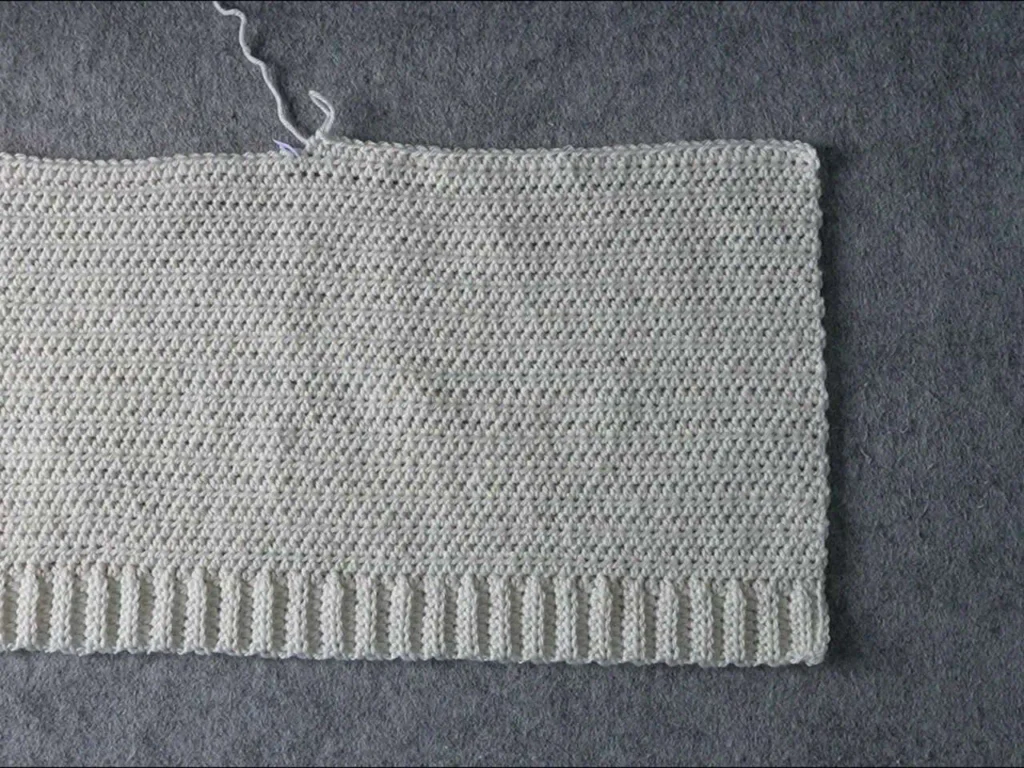
Rows 2-27: ch1, turn, hdc across (40)
The height of these rows must equal the width your sleeve when folded.
Note: Do fewer rows for a smaller armhole or more rows for a larger armhole.
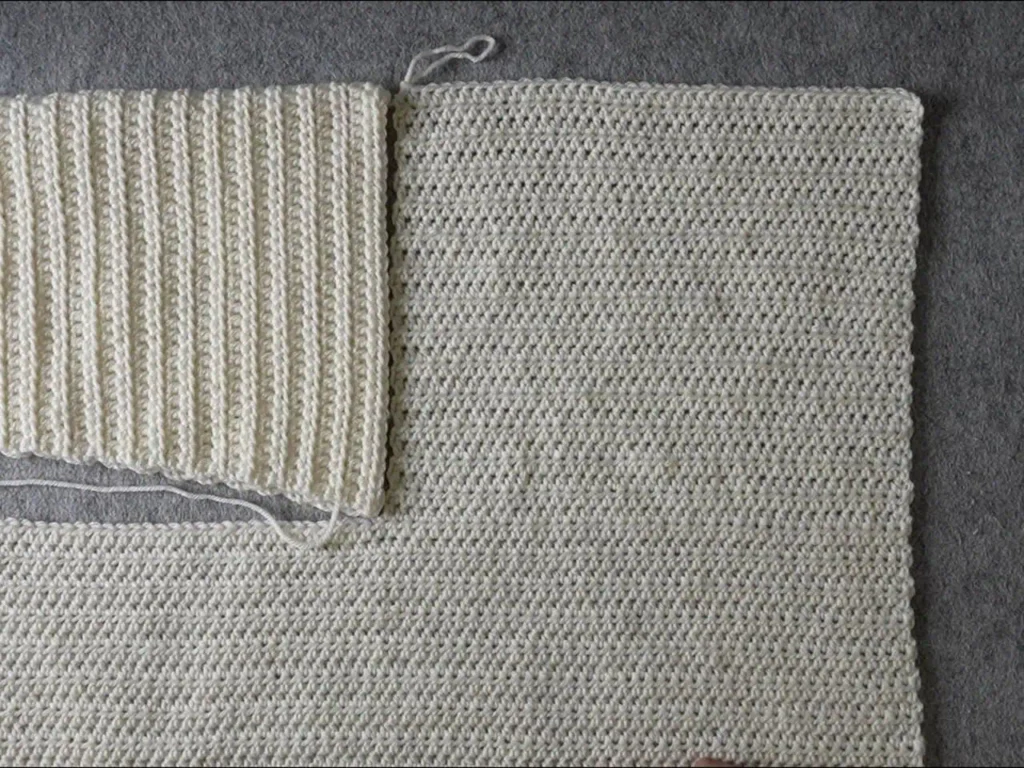
Fasten off with a long loose end twice the width of the front panel. This will be used to sew the top of this front panel to the top of the back panel.
Back Panel
Flip the body panel so that first front panel is on the right side. Attach your yarn to the stitch after the stitch marker on the right.
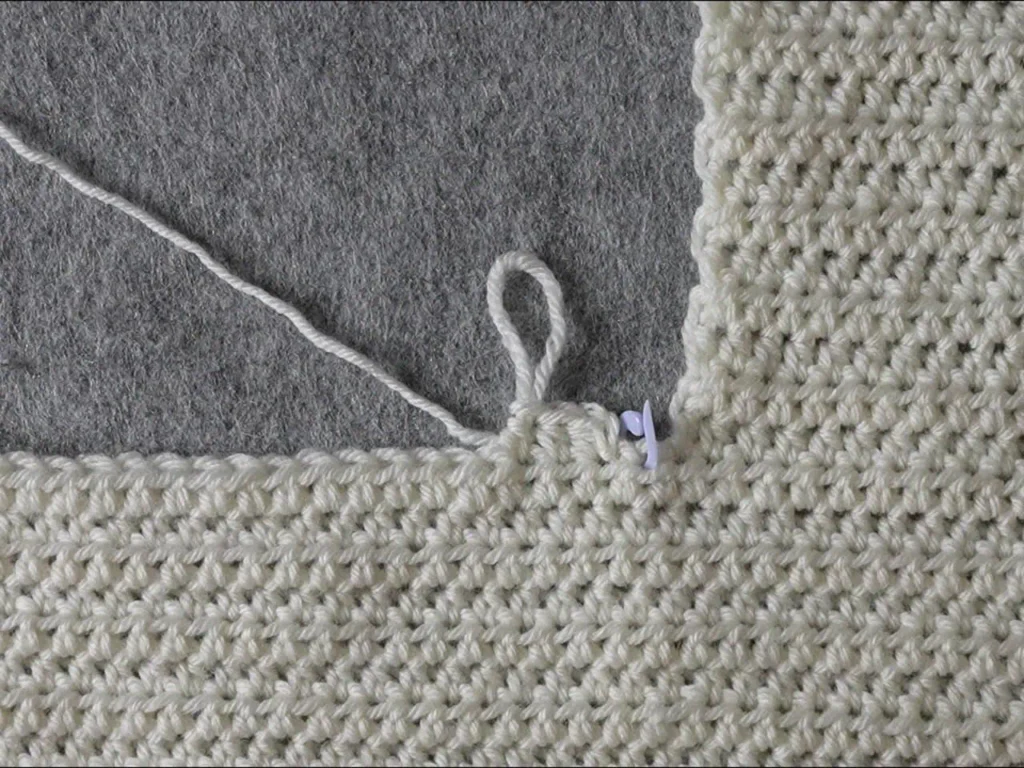
Row 1: ch1, hdc across until st marker (89)
Rows 2-27: ch1, turn, hdc across (89)
Note: If you did a different number of rows for your first front panel, do that same number of rows instead.
Fasten off.
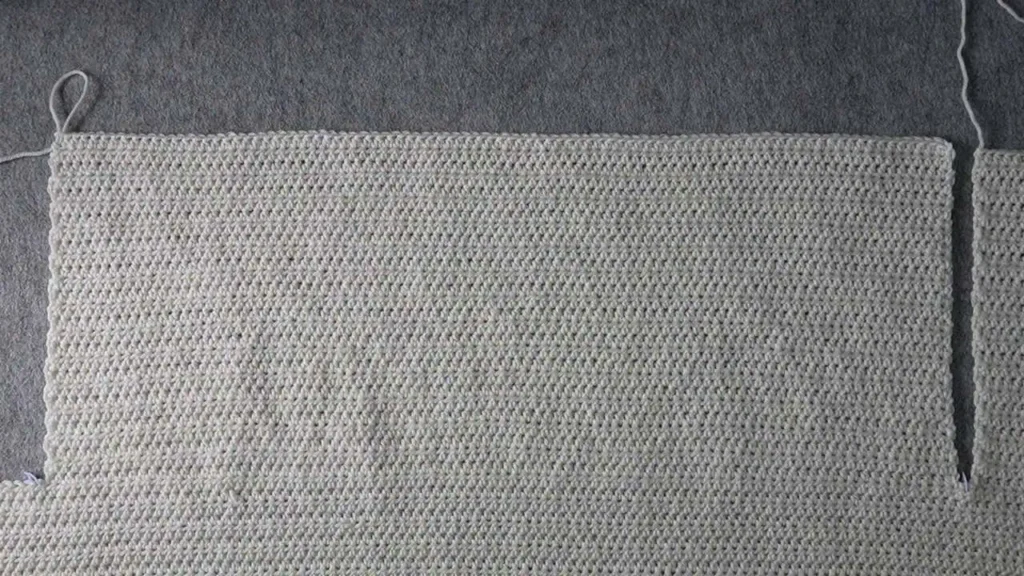
Second Front Panel
Flip the body panel so that first front panel is on the right side. Attach your yarn to the stitch after the stitch marker.
Row 1: ch1, hdc across (40)
Rows 2-27: ch1, turn, hdc across (40)
Note: If you did a different number of rows for your first front panel, do that same number of rows instead.
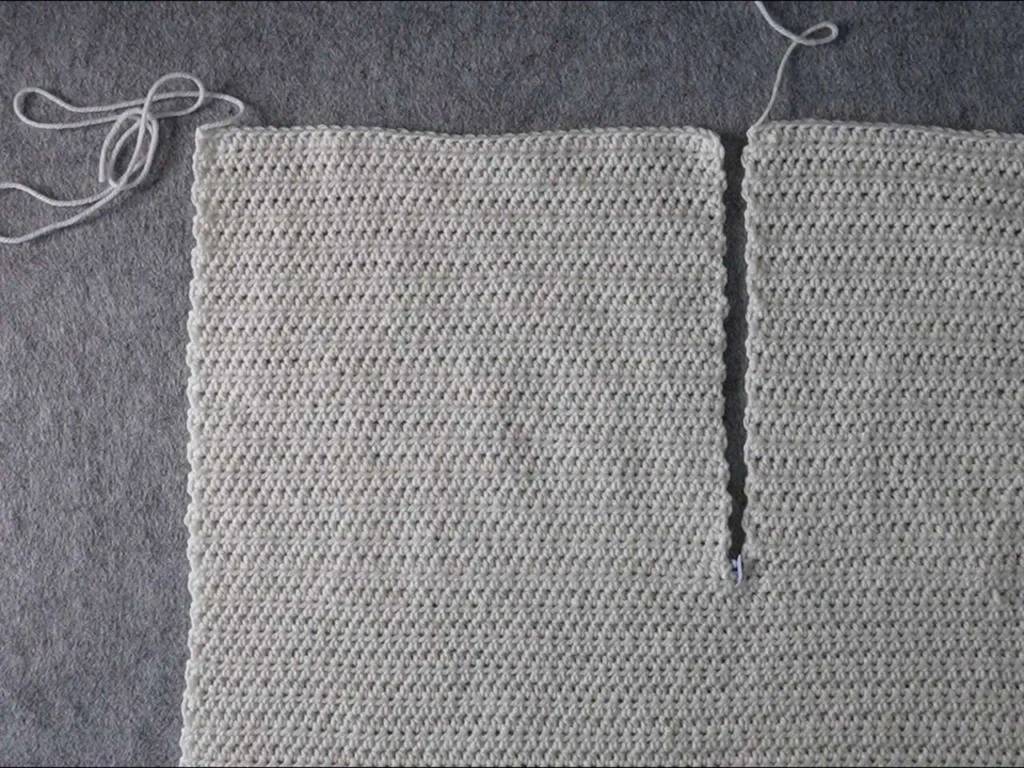
Fasten off with a long loose end twice the width of the front panel. This will be used to sew the top of this front panel to the top of the back panel.
Assembly
Now, we should have 3 pieces:
- Body panel (includes front panels and back panel)
- Left Sleeve Panel
- Right Sleeve Panel
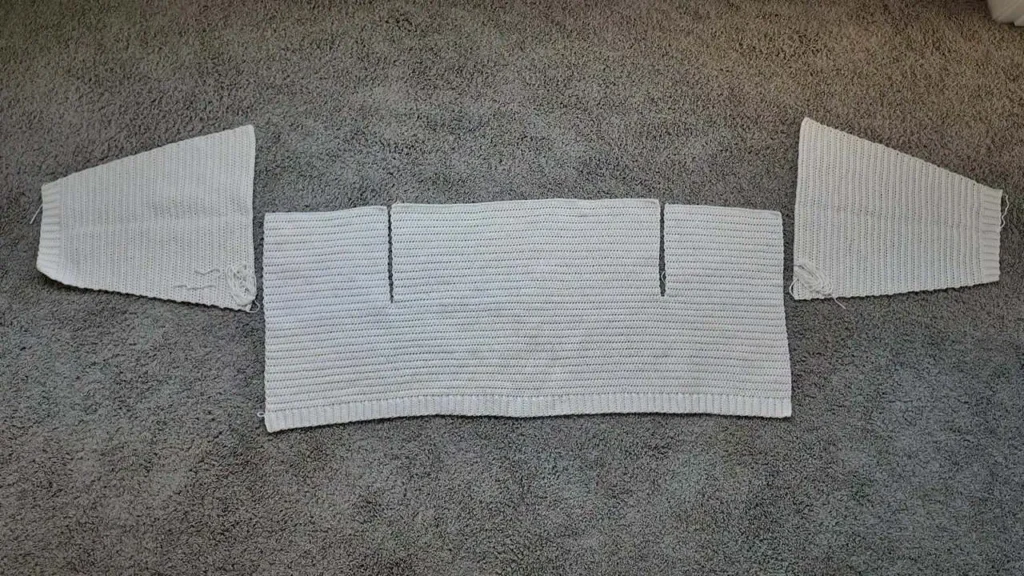
Fold the sleeves in half and fold the front panels in.
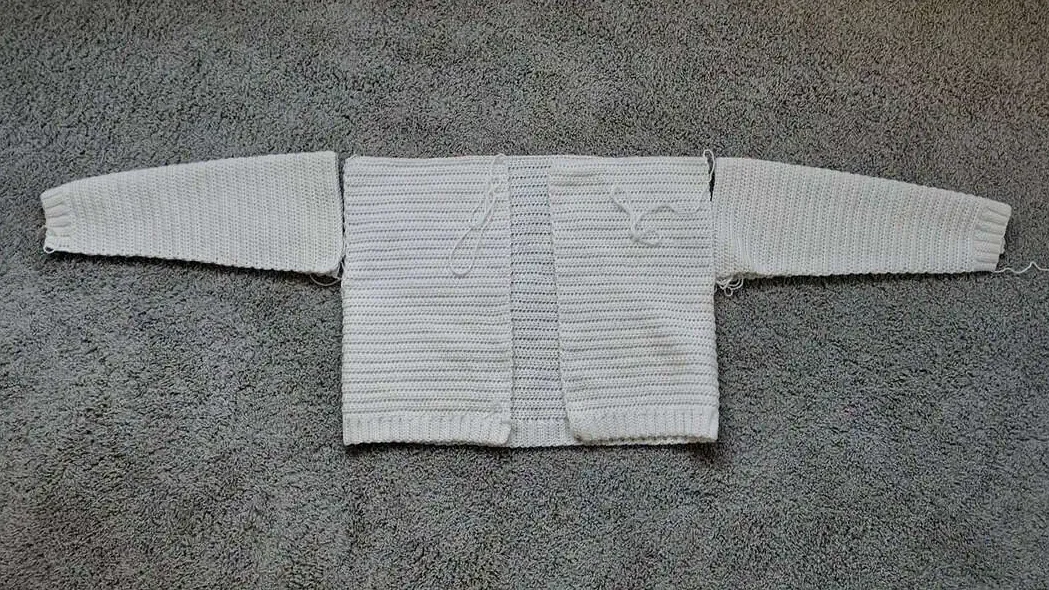
To assemble the cardigan, I used the whip stitch, but you can use your preferred method. Remember to tie a double knot at the end of every seam.
Sewing the Shoulders
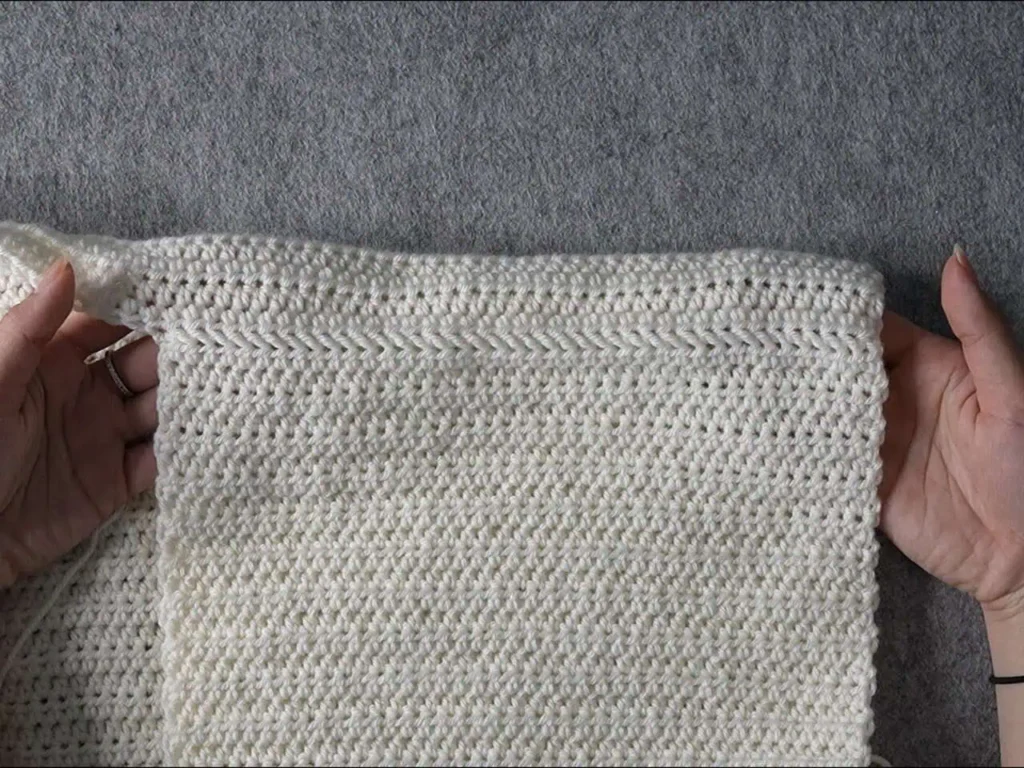
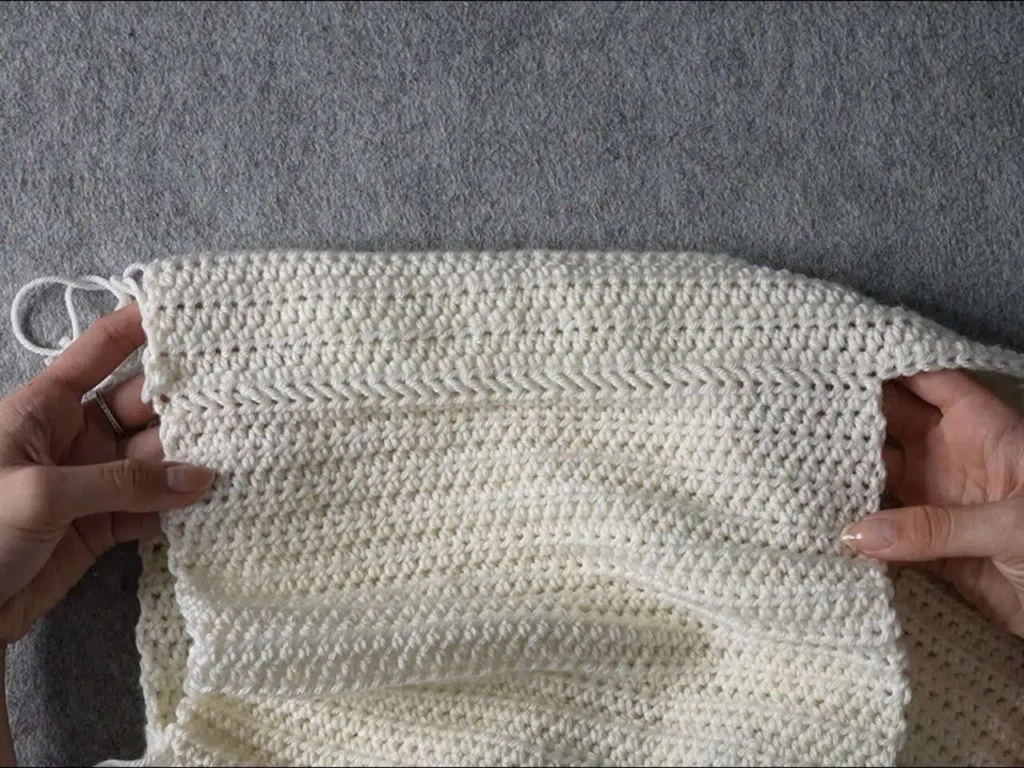
With the long loose end we left on the right front panel, sew the top of the right front panel to the top of the back panel starting from the right end. Tie a knot at the end.
Count the 40th stitch from the left end of the back panel. Repeat Step 1 with the left front panel starting with that 40th stitch.
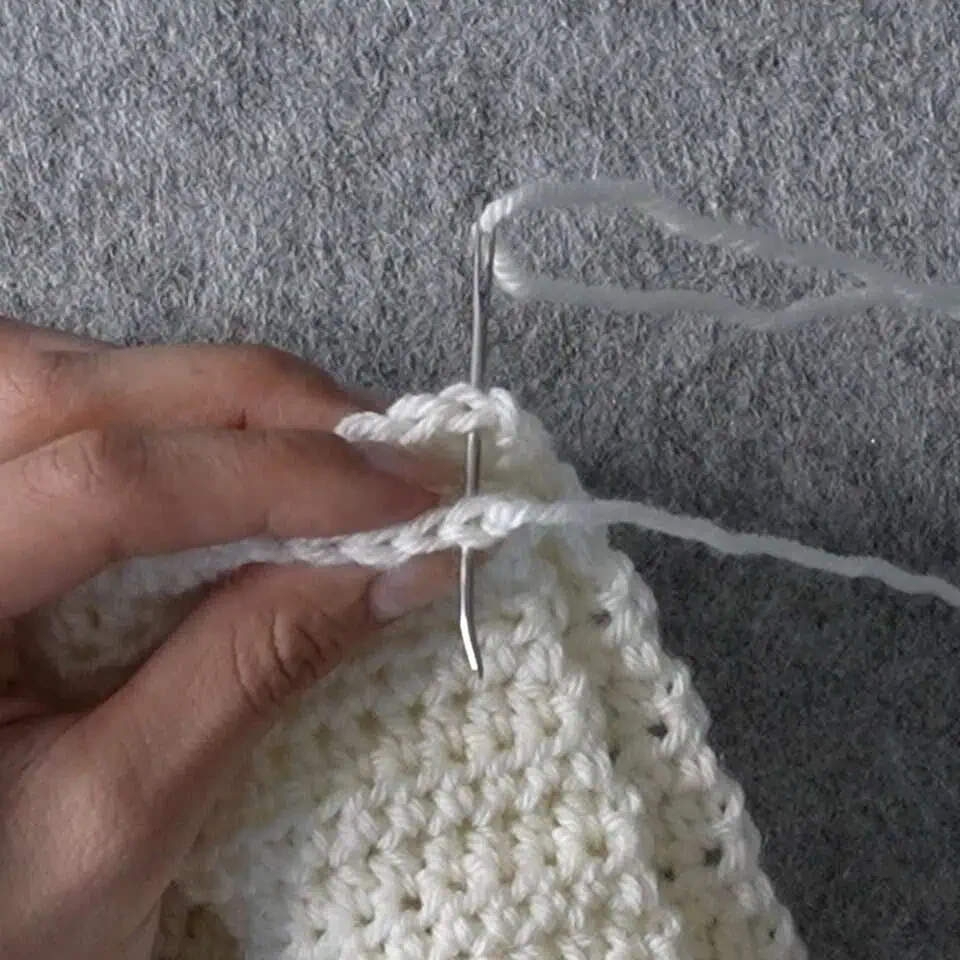
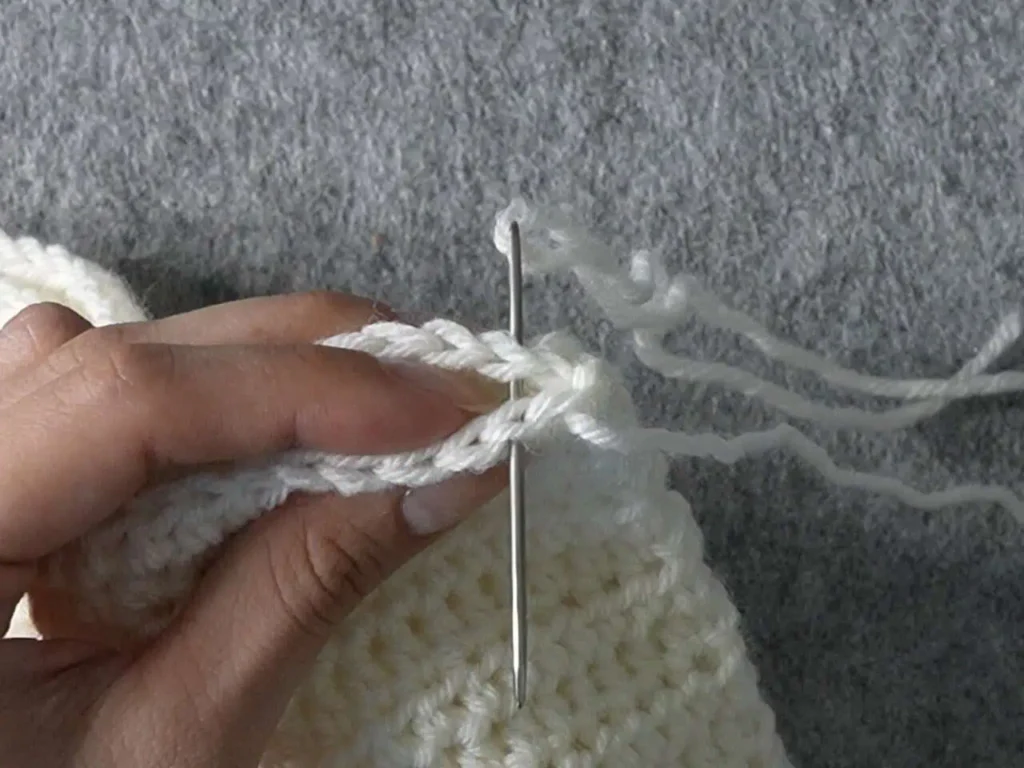
Sewing the Sleeves
Tip: Mark the stitch in the middle of the last row of the sleeves (34th stitch). This middle stitch should line up with the shoulder seam when you sew the sleeve to the armhole.
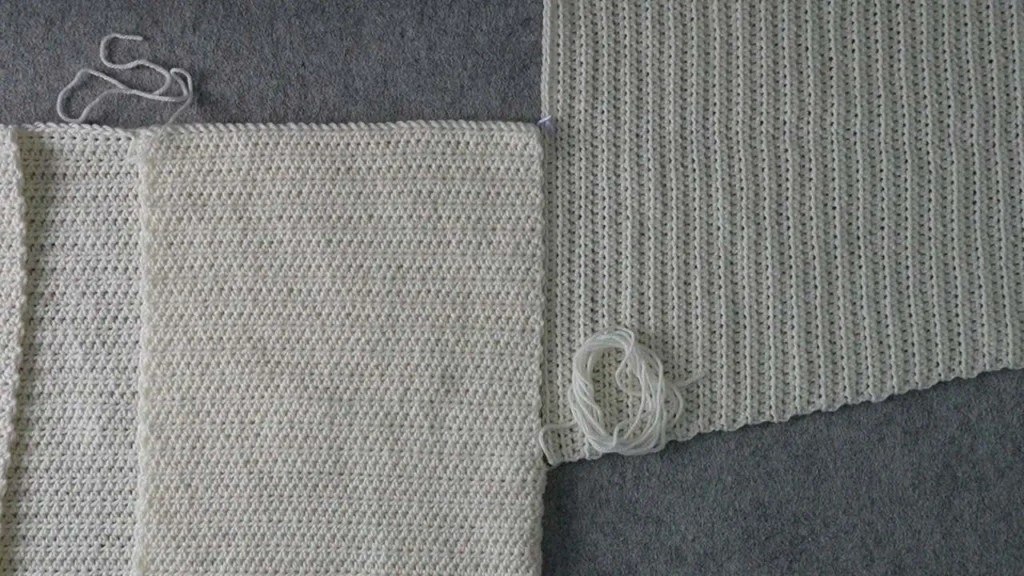
Fold one of the sleeves in half and line it up with the armhole. Make sure the long loose end we left on the sleeve is on the top layer of the sleeve. Rotate everything to the left, so we can sew right-to-left.
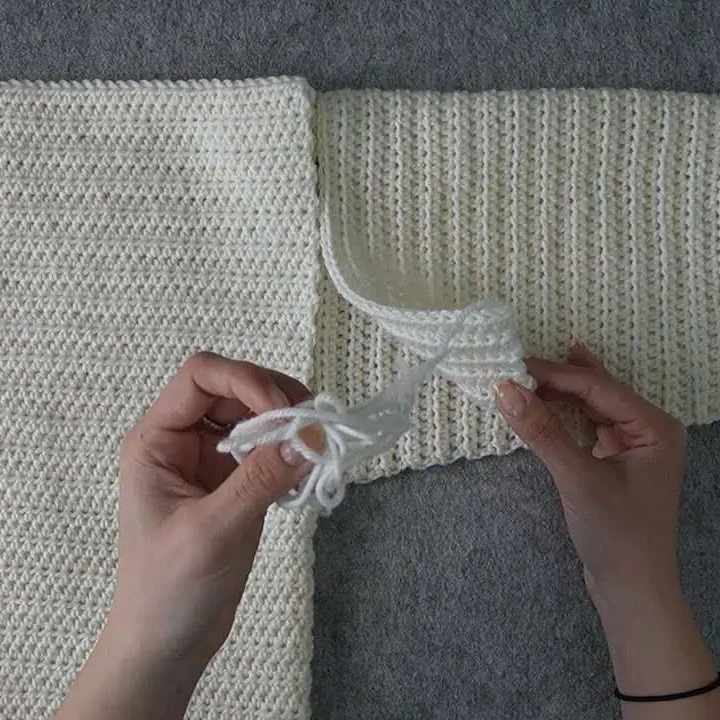
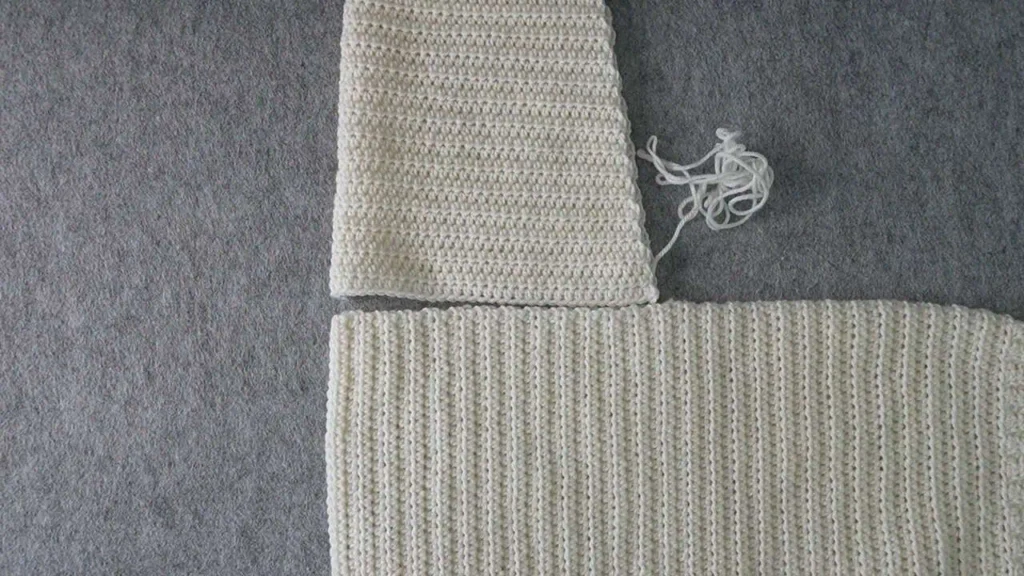
Pinch the top layer of the sleeve and the front panel together, while lining up the stitch marker on the sleeve with the shoulder seam. With the loose end we left on the sleeve panel, sew across, starting from the underarm up to the shoulder.
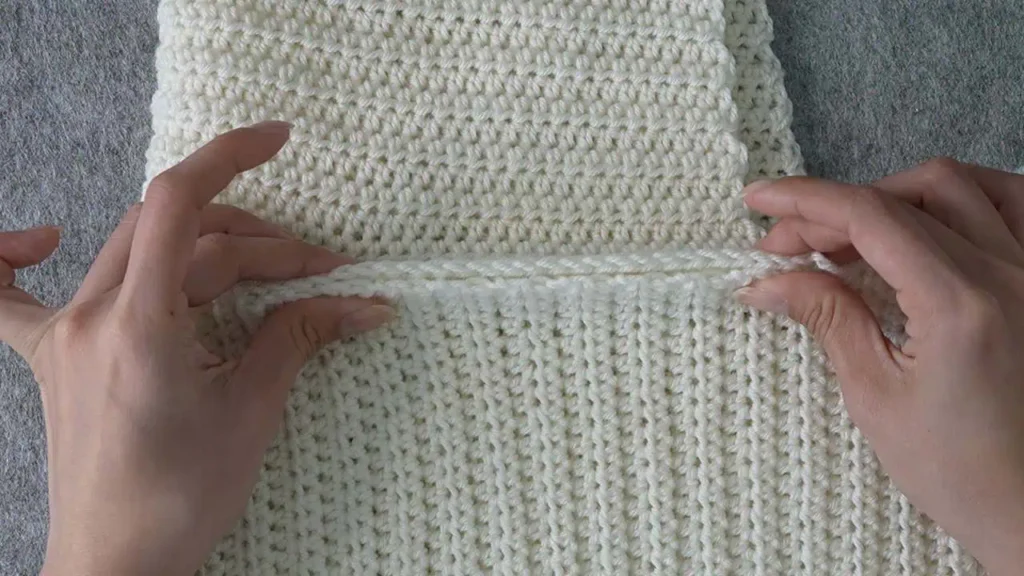
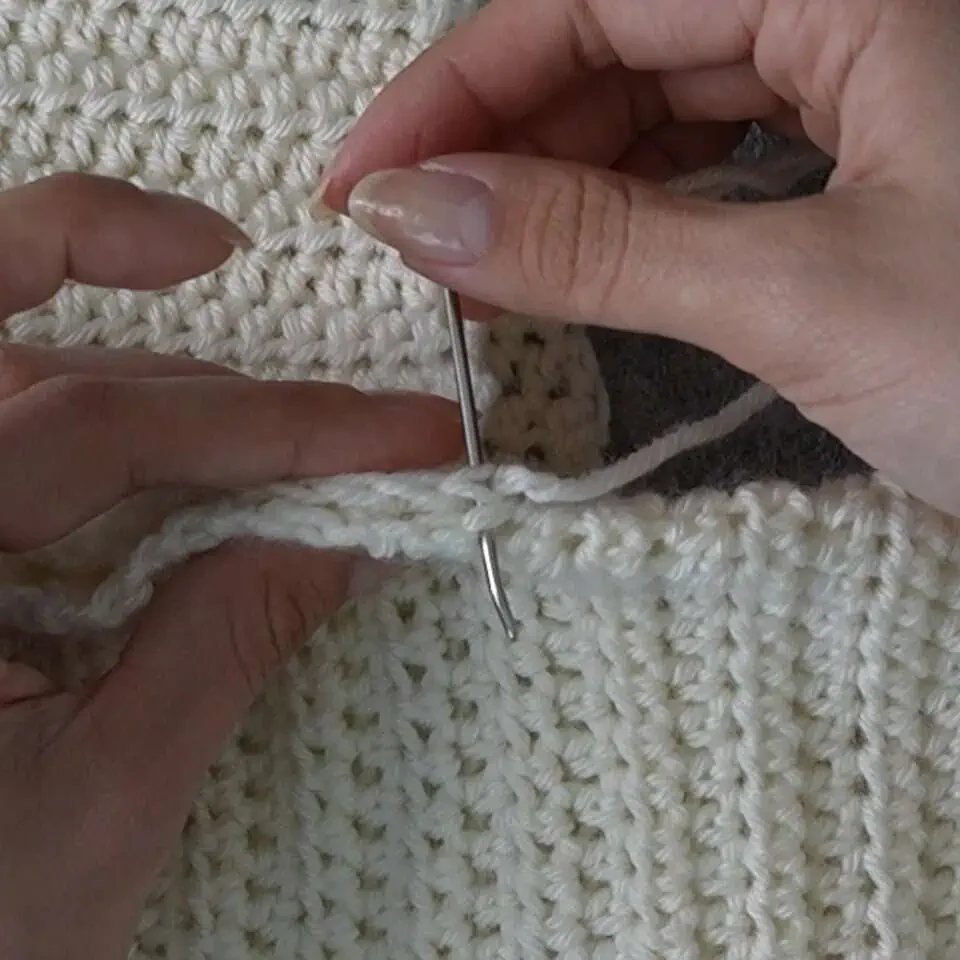
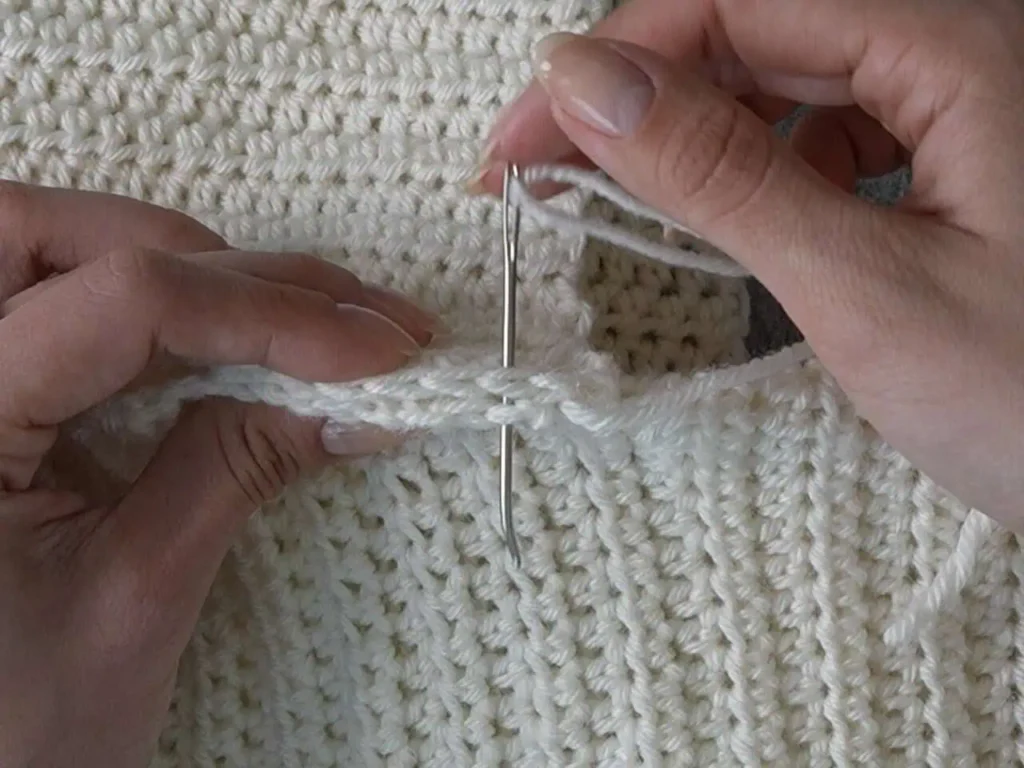
Flip your project, and sew the other half of the sleeve to the back panel.
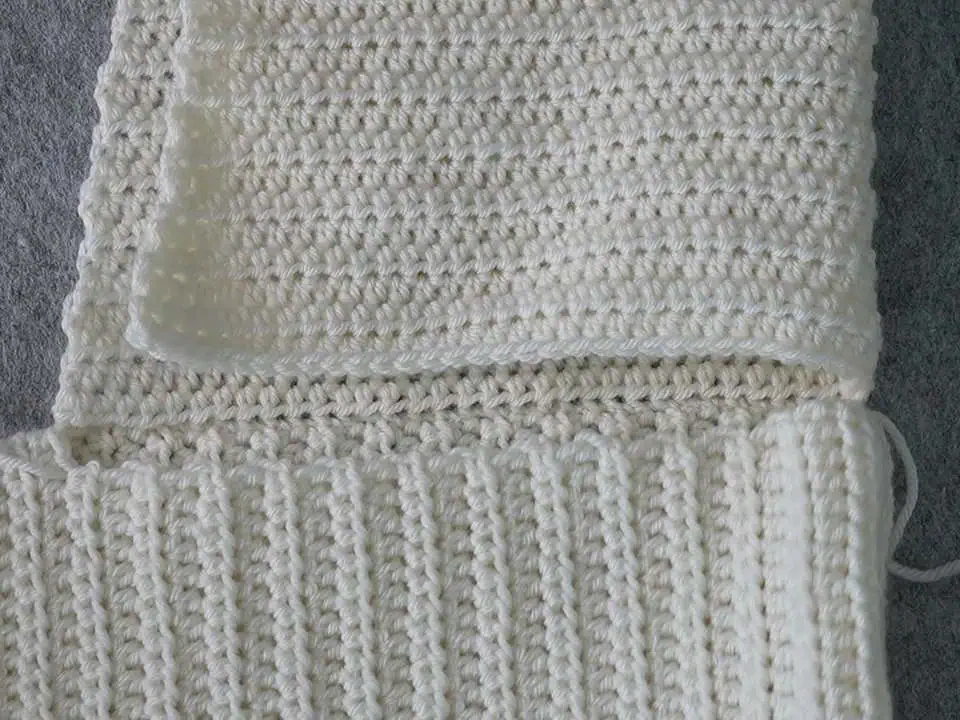
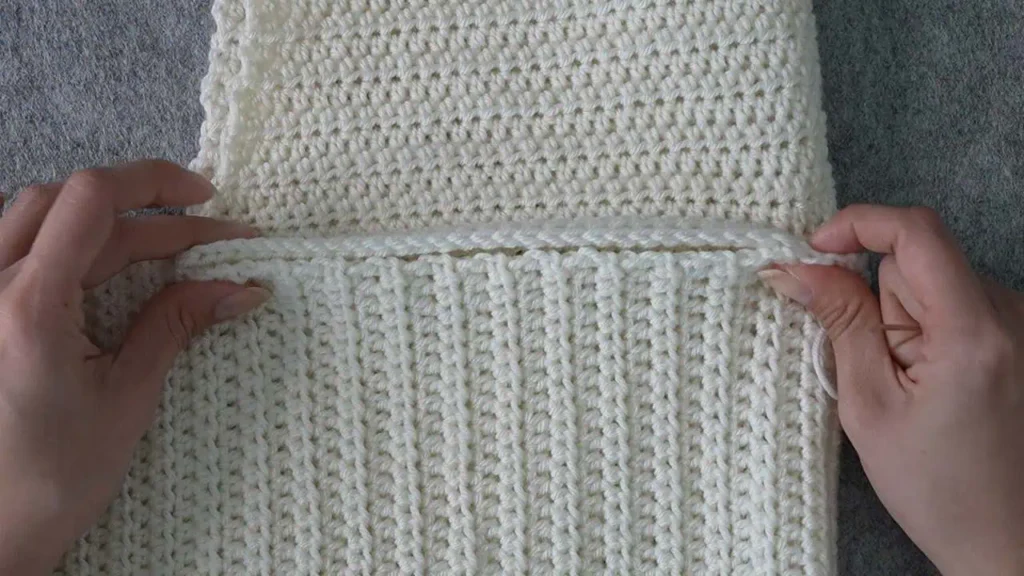
Double knot your working yarn to this loose end at the underarm to secure the seam along the armhole.
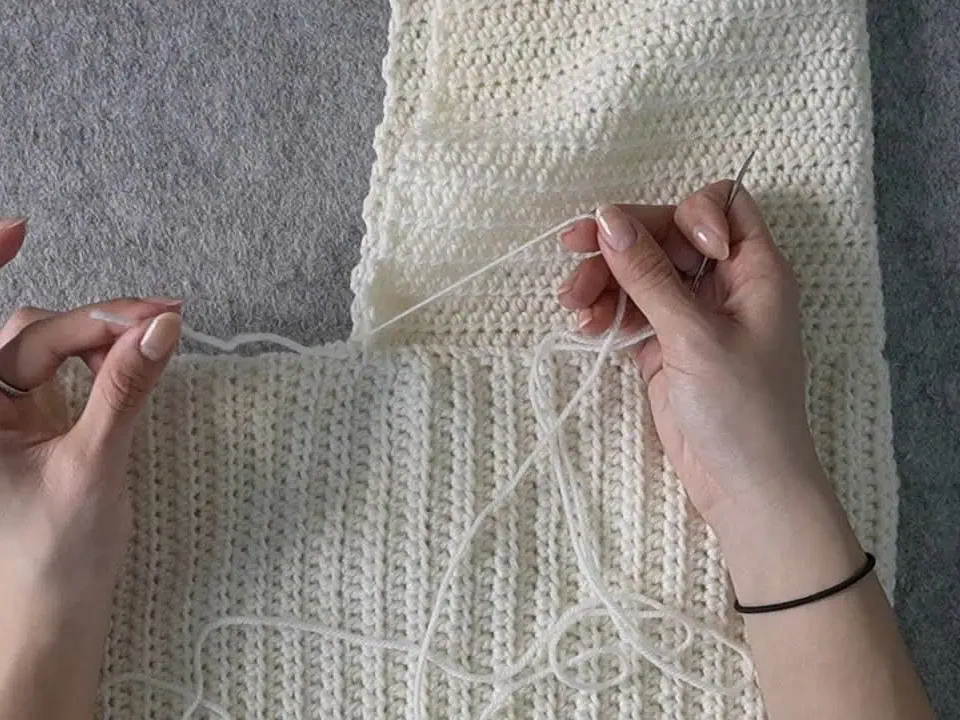
Line up the rows of the sleeve and sew across to make your sleeve into a tube. Tie a knot at the end.
Tip: Go under only one loop on either side of the sleeve to make the seam less bulky.
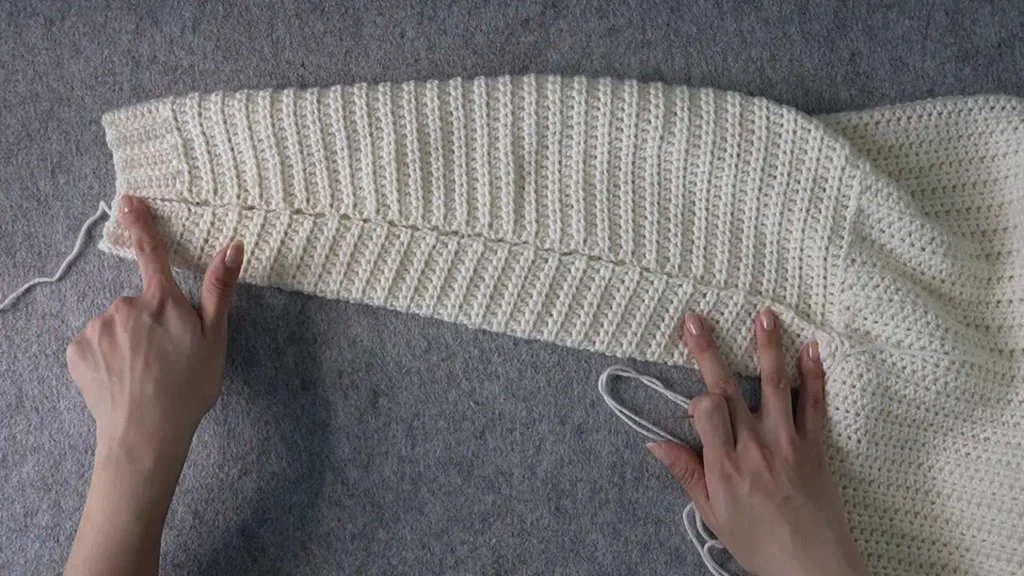
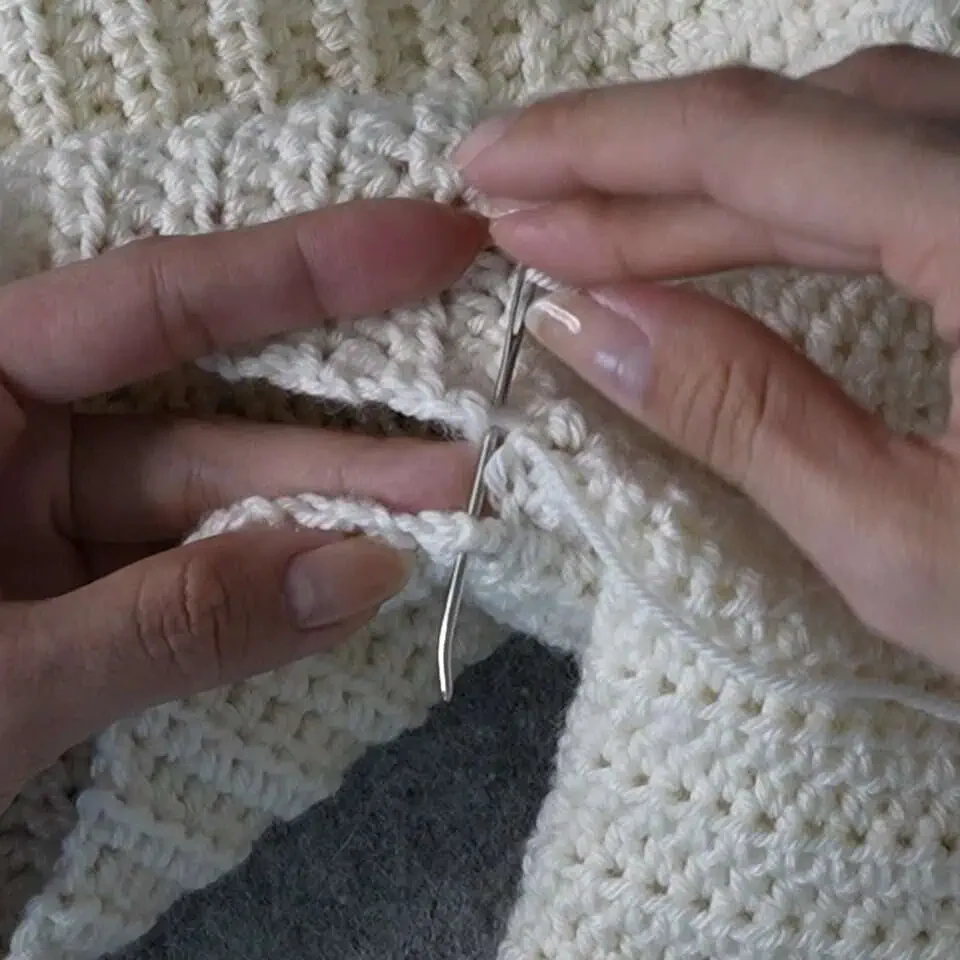
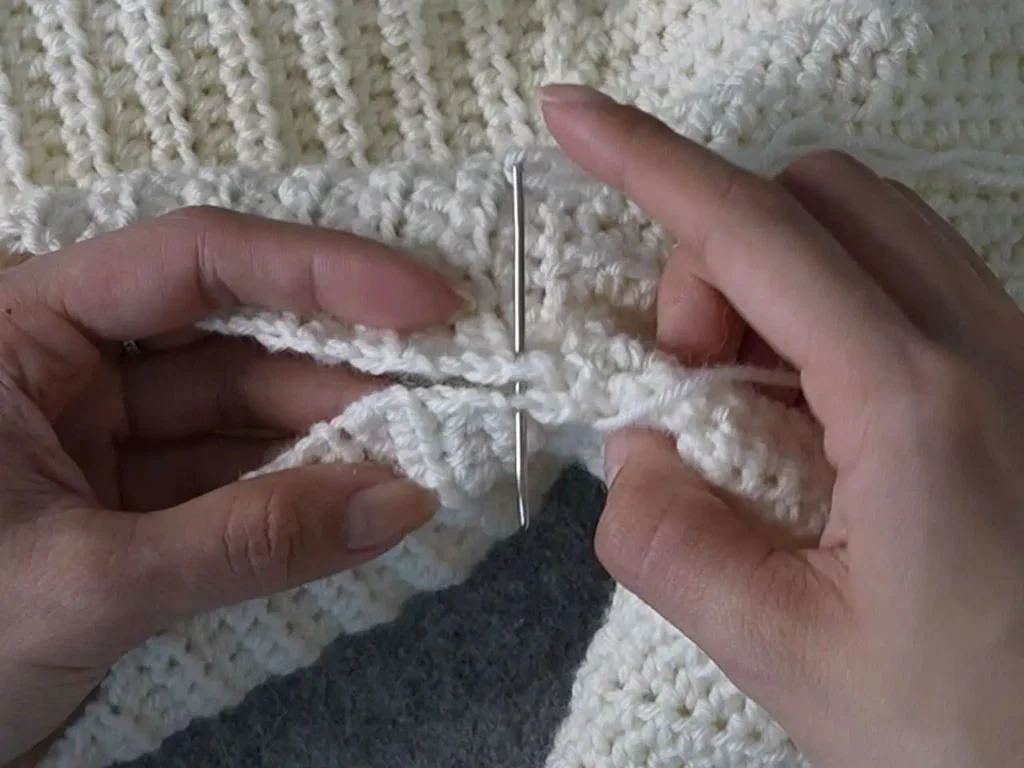
Repeat with the other sleeve.
Finishing (Optional)
Next, we’ll line the sides of the front panels to make it look more finished.
Attach your yarn to the bottom of the left front panel.
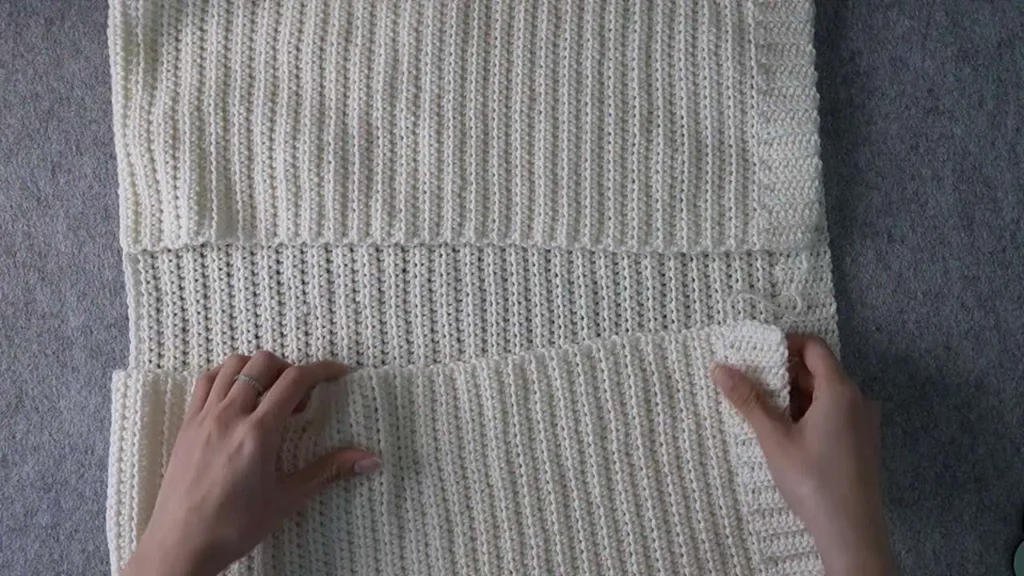
ch1, hdc across the ribbing, skipping 1 stitch in the middle
Since the ribbing was done in a smaller hook, we are skipping 1 stitch to match the width.
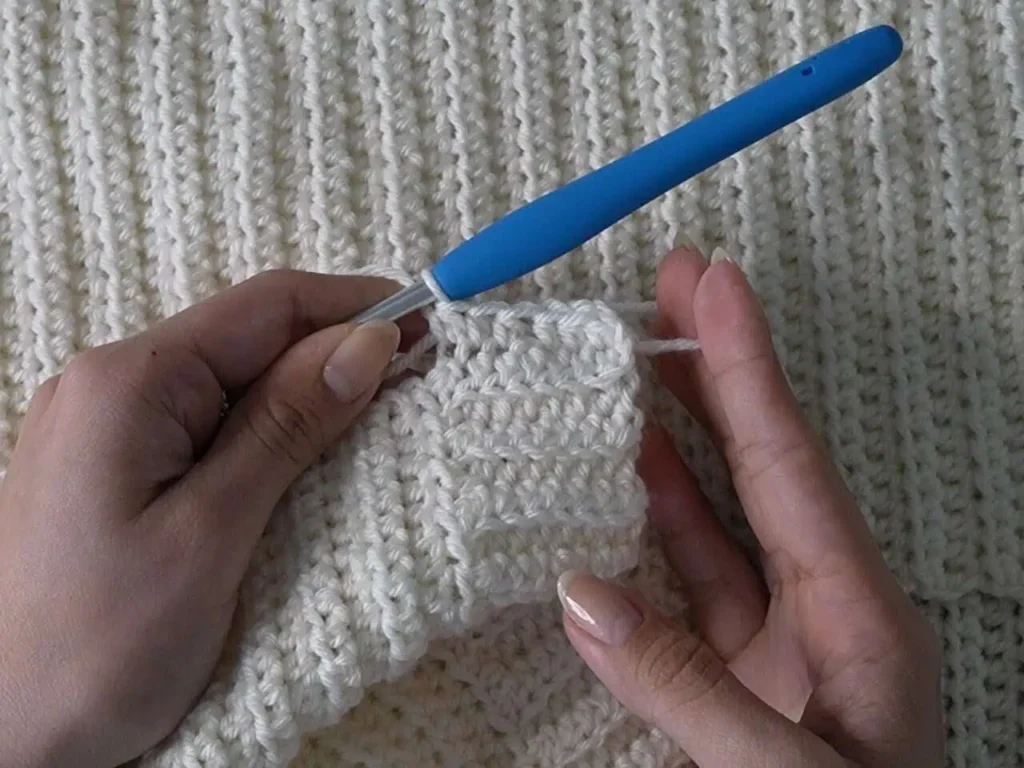
hdc into the side of each row and every other ridge (5 per every 4 rows)
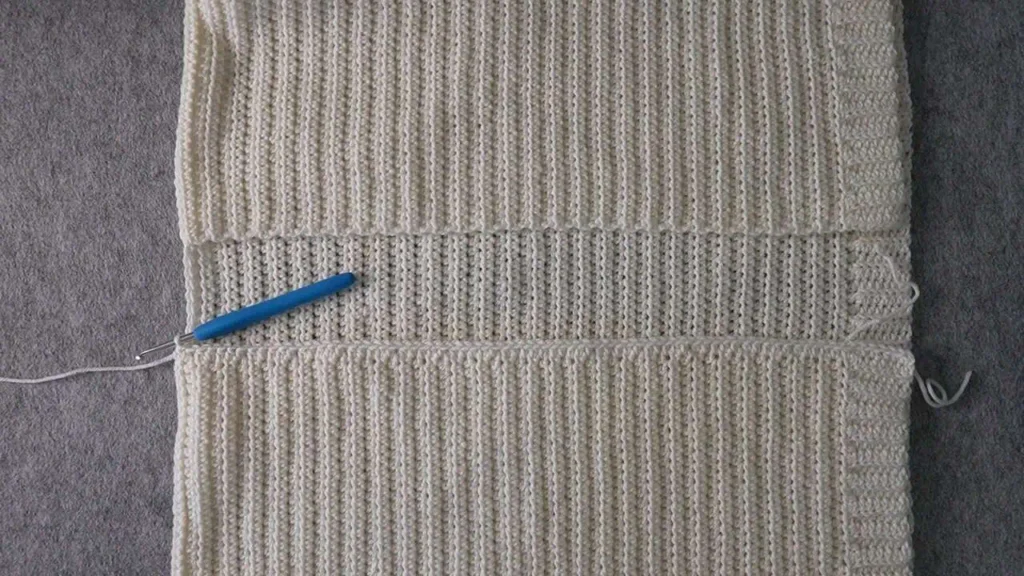
hdc across the back panel
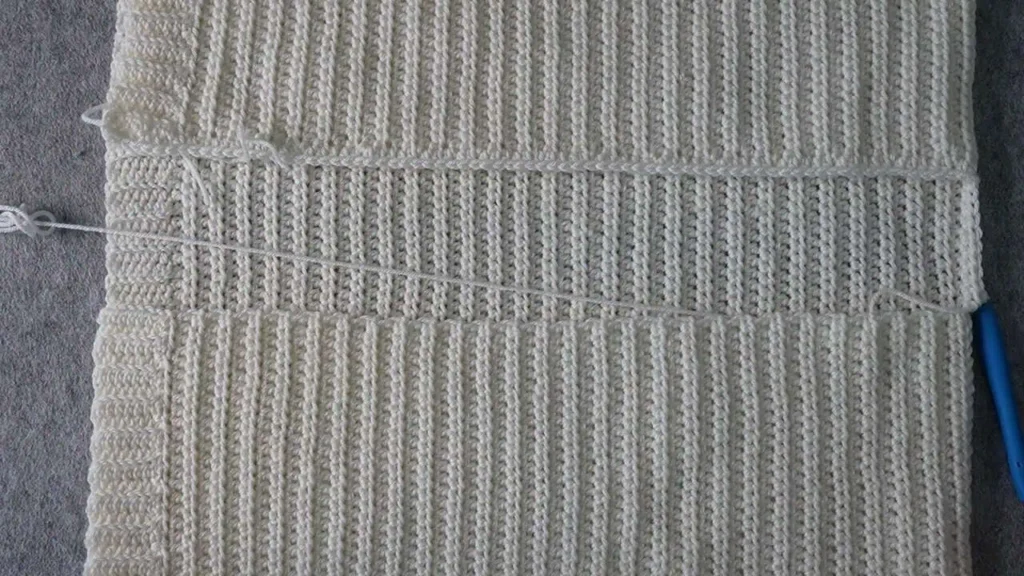
hdc into the side of each row and every other ridge (5 per every 4 rows), hdc across the ribbing, skipping 1 stitch in the middle
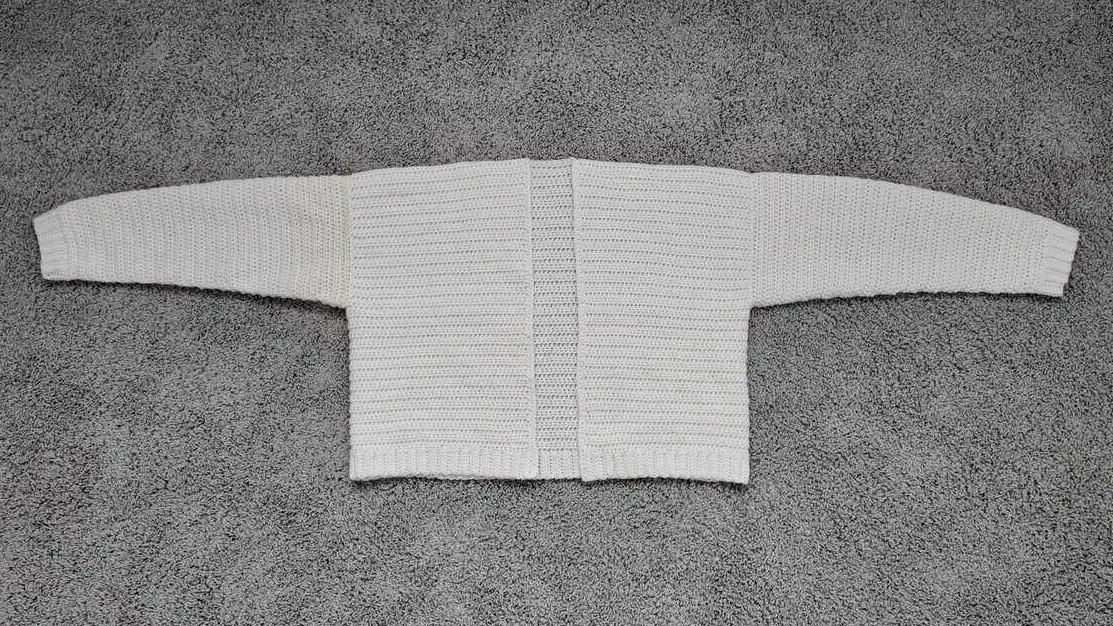
Finished Crochet Cardigan
Weave in your loose ends and your crochet cardigan is finished!
I am thinking of making this and honestly, thank you for providing this for free with such clear guidance. I am eternally grateful.